
- The global fleet management market is growing at a CAGR of 10.05% from 2026 to 2035. This growth is largely driven by major domain trends.
- EVs made a 20% jump year over year, reflecting the growing focus on resource efficiency and sustainability.
- The global market for fleet management software is predicted to grow from $38.28 billion in 2026 to $152.89 billion by 2034.
- Roughly 80% of fleet professionals now use GPS fleet tracking, which aligns with the fact that fleet telematics has become a standard in the industry.
- AI is reshaping many processes in fleet management, including predictive maintenance, where such models can boost employee productivity by 20%.
- Workflow optimization, driver retention, and cybersecurity have become strategic trends for fleet companies.
- Agentic AI is the newest trend and the most oversold: Gartner expects over 40% of agentic projects to be canceled by 2027, so narrow scope beats broad ambition.
The global fleet management market is on track to roughly double this decade. In fact, Precedence Research projects it to grow from $29.3 billion in 2025 to $76.3 billion in 2035. The most rapidly growing directions are the ones that pay back quickly, such as telematics, AI predictive maintenance, and integrated fleet management software. But there are also other trends that are more relevant in the long term. Among them are fleet electrification and other sustainability-oriented practices, the use of autonomous vehicles, and the push to retain drivers while securing connected systems.
Together they’re shifting fleets from reactive, hardware-heavy operations toward software-first, data-driven decision-making.
I’ve spent more than a decade working on fleet and telematics software, so I wrote this guide the way I’d brief a client: what’s actually changing, what the numbers say, and which trends are worth your budget first. business to harness the benefits of these transformations. If you have any questions about the latest trends or custom software development process, you can reach out to us via info@volpis.com, our team is always happy to assist you.
Why are fleet management trends accelerating in 2026?
Fleet management is growing quickly under the pressure of four forces hitting at once:
- Tighter margins force fleets to extract efficiency from every dollar. Every workflow should be optimized as companies invest heavily in maintenance, fuel, driver behavior. Maximizing ROI in fleet management becomes a top priority for each new initiative.
- Stricter emissions regulations push electrification and fuel optimization from optional to mandatory, especially in regulated regions.
- Cheaper sensors drop the cost per vehicle from hundreds to tens of dollars, making telematics viable for mid-size and smaller fleets.
- Shifting global conditions, such as fuel price volatility, supply chain risk, geopolitical uncertainty, make fleet visibility and predictive planning critical survival tools.
At the core of this shift is data, which comes from more advanced telematic hardware, AI-powered analytics, and the rapid evolution of fleet monitoring technologies.
To benefit from such capabilities, companies invest in building fleet apps. Want the deeper build-side view? See my complete guide to fleet management software development.
Top 9 fleet management trends for 2026
The nine trends below show what’s moving from experiment into standard practice. Taken together, they point to what fleet operations need to stay profitable in 2026: connected vehicles, smarter maintenance, safer drivers, tighter software integration, and security built in from the start.
Trend 1: Telematics and connected vehicles become the default
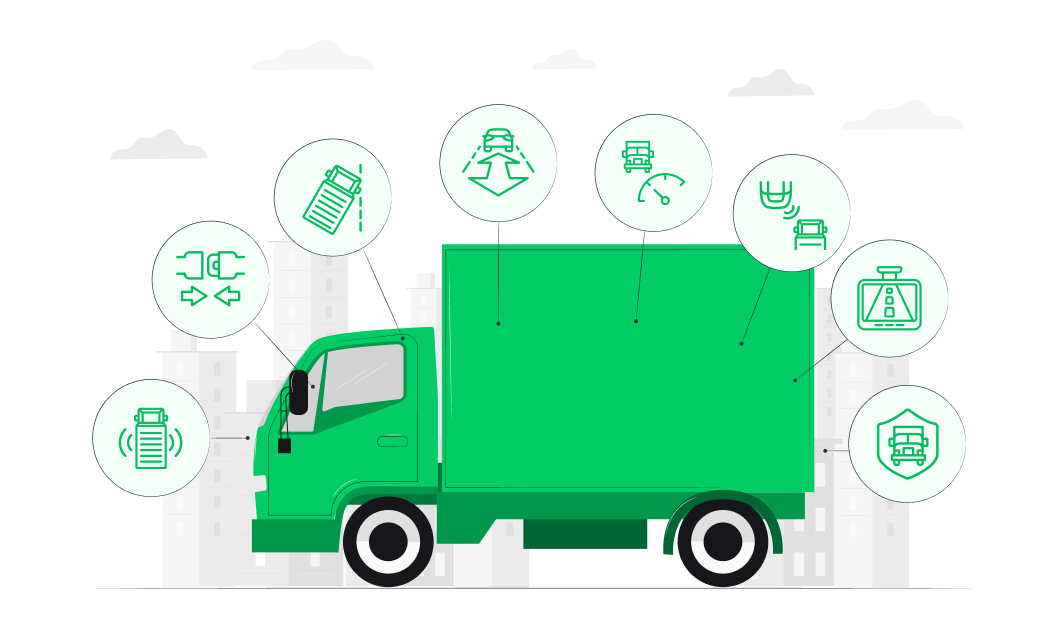
Telematics is the foundation that every other trend stands on. In 2026, connected vehicles that stream location, engine, and behavior data in real time are no longer a premium add-on; they’re the baseline. The Verizon Connect Fleet Technology Trends Report reveals that roughly 80% of fleet professionals now use GPS fleet tracking.
The companies combine AI-powered video intelligence with GPS fleet tracking to gain better visibility into driver behavior. AI telematics dashcams and ADAS flag distraction, tailgating, and harsh events as they occur, then turn footage into coaching that brings better ROI. According to the same study, 74% of fleet companies report improved driver safety, 41% emphasize better driver coaching, and 48% reduced accident-related costs.
The best thing about smart fleet safety telematics is that its tailored adoption can deliver a strong ROI within the first year.
When we built FleetSu, the whole point was to drop plug-and-play GPS hardware and track location and vehicle performance through a native app instead. We added NFC vehicle detection so that a driver can connect to a vehicle while starting a trip. The driver can also set the “Off Duty” status when the trip is over to enter privacy mode. The lesson: removing hardware lowers cost per vehicle and removes the install bottleneck that slows fleet rollouts.
If you’re planning a connected-vehicle rollout, my breakdown of how to implement IoT in fleet management covers the architecture choices in detail.
Trend 2: Electrification is reshaping fleets

Electrification is moving from pilot projects to procurement policy, but adoption is uneven. In 2025, EVs made up about 30% of all new cars sold worldwide, a 20% jump year over year, according to the International Energy Agency report. Regional gaps are huge: about 97% of new car sales in Norway and 55% in China, versus around 10% in the United States, according to the Pew Research Center.
Commercial fleets continue to lag behind despite the long-standing rise of EV adoption. In fact, a 2024 study by Cox Automotive found that 86% of commercial fleets did not include a single EV. This means that there’s a lot of work to be done by fleet companies that want to follow modern sustainability trends.
However, reduced environmental footprint is not the only benefit of fleet electrification. In fact, EVs have lower operational costs than traditional fleet vehicles, and the use of renewable energy sources can help reduce fuel costs and decrease reliance on fossil fuels.
But to get measurable fleet electrification ROI, you need a smart approach. The 2026 trend isn’t “go all-electric”; it’s “switch to EVs on routes where they’re already profitable,” and model the rest. To maximize cost savings from your fleet electrification, use certain practices, such as predictive charging for EV fleets.
Trend 3: AI and predictive maintenance move from hype to ROI
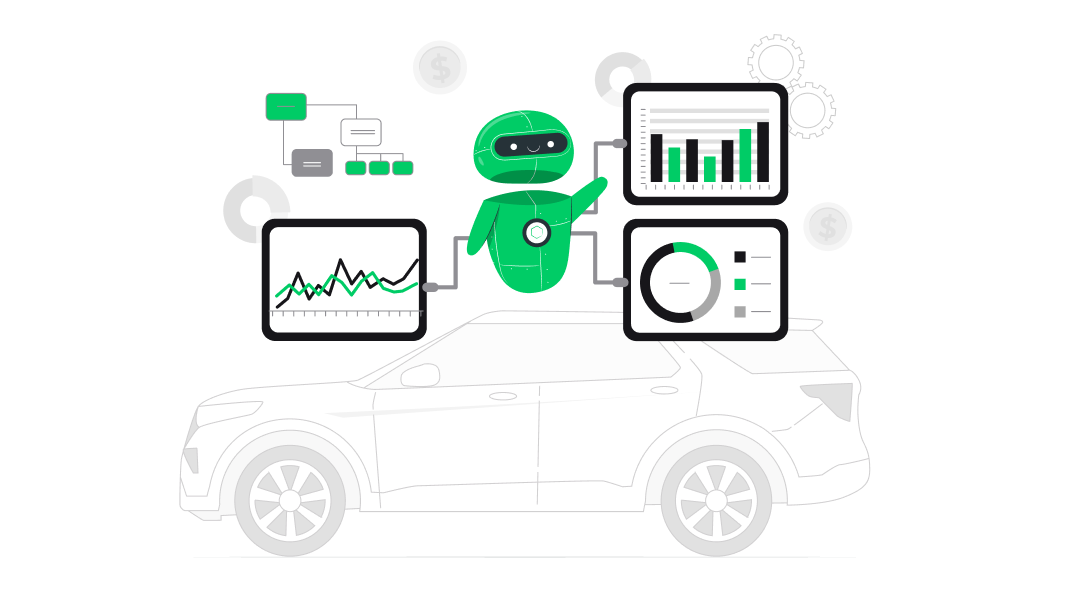
AI’s clearest fleet payoff in 2026 is predictive maintenance: fixing vehicles before they break. The study from the Brainae Journal of Business, Sciences and Technology reveals that structured predictive maintenance programs can lower maintenance costs by 40% and decrease equipment failure rates by 60% across industries. Artificial intelligence brings additional value to such workflows, as the report from Deloitte shows that AI in predictive maintenance can increase labor productivity by 20% and reduce new equipment costs by 5%. For more insights on this topic, check out my comprehensive guide to predictive fleet maintenance.
The use of AI and ML in fleet management can also offer fleet managers a clearer picture of vehicle health by monitoring performance in real time. With fleet AI, operators spot issues early and can create more efficient maintenance schedules. The result is less unplanned fleet downtime, longer vehicle lifespans, and lower operating costs.
Predictive maintenance only works if the underlying telematics data is clean and consistent. On the fleet platforms we’ve built, the projects that delivered ROI fast nailed reliable data capture first, then layered models on top.
Trend 4: Fleets are consolidating into integrated software

The 2026 data story isn’t about collecting more data; it’s about ending the chaos of disconnected tools. According to Fortune Business Insights, the global market for fleet management software will grow from $38.28 billion in 2026 to $152.89 billion by 2034, and this rise is largely driven by the push toward more advanced and unified systems that cover multiple fleet workflows. Fragmented systems force fleet managers to manually sync data across telematics platforms, maintenance trackers, fuel monitoring, and compliance databases. It’s a workflow that breeds errors, delays response to problems, and wastes resources on duplicate entry and reconciliation.
A modern standard is an integrated fleet management system where telematics, maintenance, fuel, and compliance finally talk to each other. Such a solution has fewer blind spots and ensures more efficient cross-team collaboration in fleet management.
Before adding another fleet app, ask whether it writes to the same database as everything else. Across 100+ projects, the biggest source of “our data is useless” complaints is data trapped in different systems that never reconcile.
Trend 5: Vehicle autonomy is the future of fleet management
Autonomous vehicles are the longest-horizon trend, but the groundwork is being laid in 2026. According to the Grand View Research market report, the global autonomous vehicle market size was estimated at USD 68.09 billion in 2024 and is projected to reach USD 214.32 billion by 2030, growing at a CAGR of 19.9% from 2025 to 2030.
Some of the world’s biggest companies stand at the forefront of this trend. For example, Tesla invests heavily in building self-driving systems that understand their surroundings, plan safe driving paths, and make decisions autonomously, relying on data from large-scale sensors.
With the potential to reduce the workload on human drivers, autonomous trucking is widely expected to become commercially viable in the early 2030s. However, for most fleets in 2026, autonomy still means advanced driver-assistance features and partial automation rather than fully driverless trucks. Human drivers remain responsible for the vast majority of real-world freight operations.
Trend 6: Stronger focus on fuel efficiency and sustainability
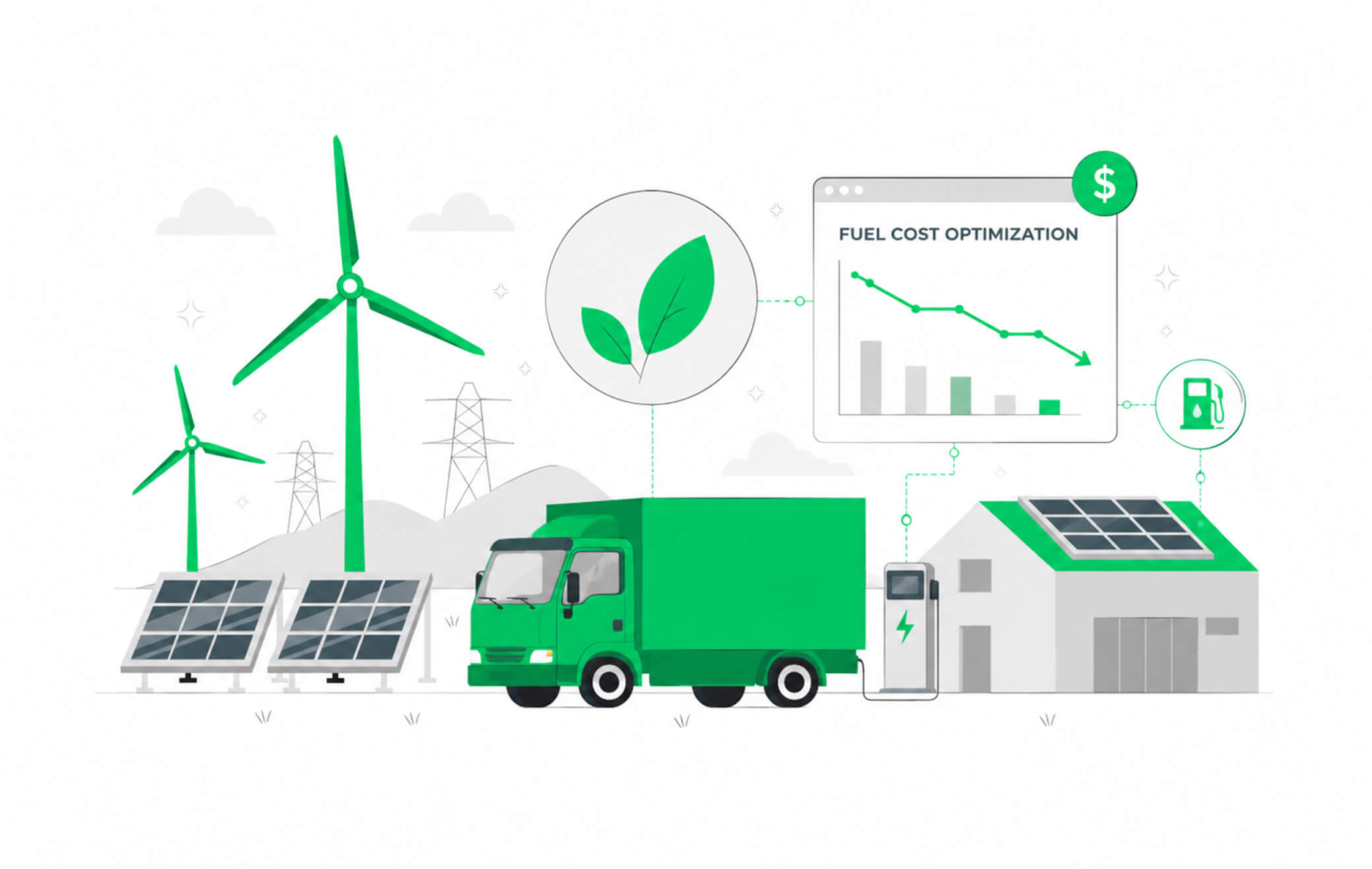
Fuel costs currently account for one of the largest portions of total ownership costs for commercial fleets, representing 21.2% of the total, according to the ATRI report from 2025. Moreover, current geopolitical conditions lead to a steady growth in fuel prices. For fleet managers, it’s a major challenge that can put the profitability of their business at risk. One way to address this problem is fleet electrification, a trend mentioned above. However, it’s not the best option for many fleets. Some of them should just invest their time and effort in improving their fuel efficiency.
Fleet managers can address this problem through practices like:
- Idle reduction
- Fleet right-sizing
- Use of alternative fuels
- Route optimization.
Apart from optimizing fuel costs, such an approach helps companies follow modern sustainability trends. With 23% of customers making their purchase decisions based on company reputation, according to an article in the International Journal of Advertising, the transition to sustainable practices can offer commercial fleets a big competitive advantage. Overall, improved fuel management is a notable trend where sustainability and the desire to reduce fleet costs go hand in hand.
Trend 7: Driver retention becomes a board-level issue
An article from MDPI highlights a practical but often overlooked cost of driver behavior: aggressive driving patterns -like hard braking, rapid acceleration, and extended idling – directly increase wear on key vehicle components such as brakes, tires, and the drivetrain. Over time, this doesn’t just affect maintenance schedules; it quietly pushes up operating costs and shortens vehicle lifespan across the entire fleet.
Driver turnover is one of the fundamental causes for such problems because new drivers are more prone to damaging behaviors. Regardless of the driver’s experience, adapting to new conditions typically takes time. To be on the safe side, fleet managers need to invest in retaining top-performing employees instead of focusing on new driver training. Here’s where driver behavior monitoring software comes into action.
Additionally, consider crafting a driver reward program to keep drivers satisfied and improve retention. Loyal drivers who understand that the company recognizes their effort typically deliver measurable results. These include reduced brake and tire wear, fewer collision claims, longer vehicle service life, and reduced fleet downtime.
Trend 8: Cybersecurity becomes a strategic priority
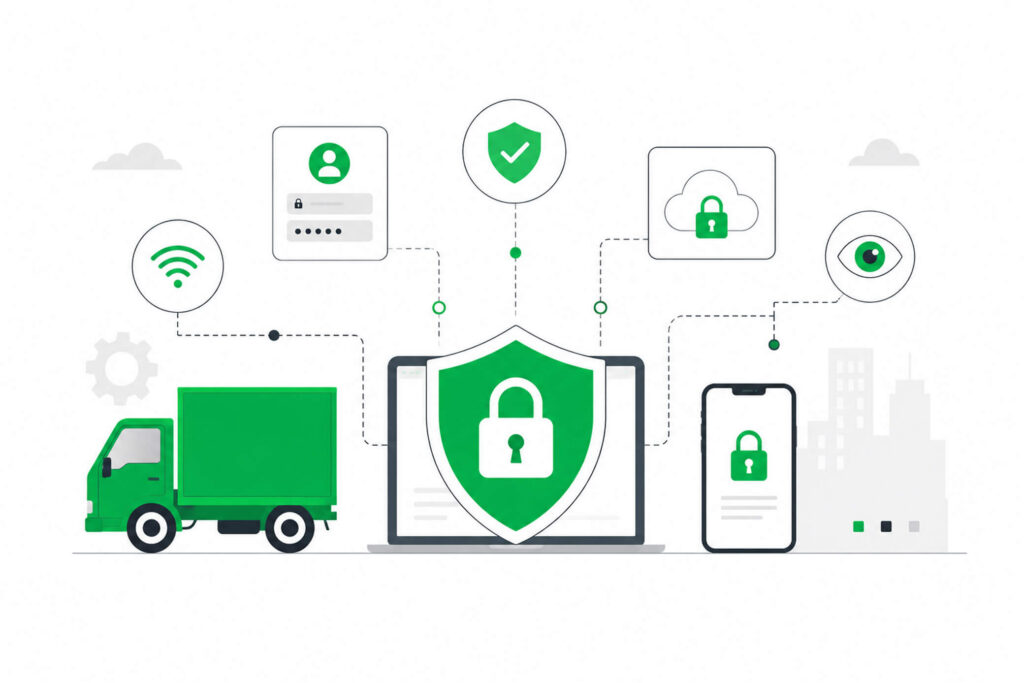
As fleets are becoming more connected and reliant on complex digital ecosystems, cybersecurity risks become more relevant. Every connected vehicle is now effectively an endpoint in a larger digital network. That means telematics units, fleet management systems, and even onboard software can become potential entry points for cyber threats.
Growing adoption of AI also increases the threat of data leaks. For example, a McKinsey study on security practices for AI adoption reveals that phishing attacks have risen by 1.265% since the proliferation of generative AI platforms in 2022. For fleet operators working with companies in regulated industries, the cost of such mistakes is too high to accept such risks.
The fundamental way to address this problem is to perceive cybersecurity as an operational concern. There are many useful practices that can be used to safeguard the fleet app, from adding powerful access control policies to a complete modernization in accordance with modern cybersecurity practices. The key to success is addressing safety concerns strategically and recognizing that strong security is something built and maintained over the long term.
We build biometric authorization and role-based access into fleet apps for a reason. The moment a platform holds real-time location for hundreds of vehicles, it becomes a target. Designing security from day one is far cheaper than retrofitting it.
Trend 9: AI moves from predicting to acting
The 2026 shift isn’t more AI in fleets; it’s AI that acts. Most fleet software still stops at the alert: it tells a dispatcher that a brake is failing or a route is blocked, and a person handles the rest. Agentic systems close that gap by executing the follow-up across connected systems, within authority limits the fleet defines.
The hype is well ahead of the evidence. Gartner expects over 40% of agentic AI projects to be canceled by the end of 2027, citing rising costs, unclear business value, and weak risk controls, and estimates that only around 130 of the thousands of vendors claiming “agentic AI” build anything that earns the label.
What that means practically: the trend is real, the vendor claims mostly aren’t, and the fleets that get value from it start narrow. My guide to AI agents for fleet management breaks down the four use cases with actual evidence behind them and how to tell a real agent from automation with a new label.
How do you implement these fleet management trends?
Prioritize fleet trends based on your business specifics. From my experience, it’s better to start with fundamentals – the data layer. Then add intelligence on top.
- Fix your fleet safety telematics foundation. Reliable data capture comes before any AI or analytics.
- Consolidate your systems into one data model.
- Layer in predictive analytics and video safety. These pay back fastest.
- Phase in electrification, where it already reduces fleet TCO.
- Build security and compliance from the start, not as a retrofit.
Final thoughts
Fleet management keeps evolving under the influence of several trends, with telematics, predictive maintenance, and integrated software delivering the fastest and most measurable results. At the same time, trends such as electrification, autonomous vehicles, and stronger cybersecurity requirements are reshaping long-term fleet strategies. Companies that invest in reliable data, connected systems, and operational efficiency today will be better positioned to stay competitive in the years ahead.
And if you have any questions regarding the latest trends in fleet management and how they can be incorporated into your software, we are more than happy to provide you with answers and insights.
With 10+ years and 100+ delivered projects in fleet management, Volpis is ready to help you get measurable ROI from adopting fleet trends.
Questions & Answers
FAQ
What are the biggest fleet management trends in 2026?
The biggest trends are connected telematics, AI-driven predictive maintenance, fleet electrification, integrated fleet management software, autonomous vehicle readiness, broader sustainability and fuel efficiency, driver retention, cybersecurity, and the shift from AI that predicts to AI that acts.
How does AI improve fleet management?
Mainly through predictive maintenance, route optimization, fuel cost optimization, and automated driver coaching. The catch is that fleet management AI only works when the telematics data is clean and consistent. In many fleets, that’s still not the case – GPS, maintenance records, and fuel data often sit in separate systems, which leads to poor-quality models and unreliable insights. The real unlock is connecting everything in one place, so fleet safety telematics, maintenance, and operations actually work off the same data. Without that foundation, AI tends to stay stuck in pilot mode.
What is the future of fleet management?
The 2030s look autonomous-ready, fully connected, and software-defined. Commercially viable autonomous trucking is expected in the early 2030s. But for most fleets in 2026 and beyond, autonomy means advanced driver-assistance and partial automation – not driverless trucks. Human drivers remain responsible for the vast majority of freight. What’s changing now is infrastructure: Level 3 connectivity is becoming standard, predictive maintenance removes surprise fleet downtime, and integrated software replaces the chaos of five disconnected tools. The fleets winning in 2026 are building for that future – not waiting for it.
Should we build our own fleet management platform or adopt an existing SaaS solution?
Build when your workflow is a competitive differentiator – specialized vehicles, a vertical niche, or customer-facing telematics. Buy for standard mixed fleets under ~200 vehicles. A hybrid path – licensing core telematics while building proprietary analytics, dispatch, and branded apps – gives most mid-market operators the best ROI. See the more detailed decision framework in the article on types of logistics apps.
What regulatory and compliance shifts should fleet operators plan for next year?
Expect tighter ELD enforcement in North America, expanded EU Data Act obligations on telematics providers, and stricter driver-monitoring rules under GDPR and US state-level biometric laws. Emissions reporting (SEC climate rules, CSRD) will also pull fleet data into the finance team’s scope – model your data warehouse for audit from day one.