
- Predictive charging answers one question, whether every vehicle reaches its departure charge, from two predictions: energy needed and when the vehicle is free to charge.
- If overnight demand sits well under what your power cap allows, you don’t need a model. Sorting vehicles by departure deadline already solves the schedule.
- Forecasting earns its place when the load profile is uneven, not when the tariff is complicated.
- A forecast that strands a van costs more than the tariff it saved. Set the error budget before you pick a model.
Are you wondering how predictive charging can enhance electric vehicle fleets?
Predictive charging answers one question the day before: will every vehicle have enough charge for its next departure? You get the answer while you can still swap a route, move a departure, or book a fast charger.
This guide covers what a charging forecast predicts, when a simple rules-based schedule is enough, and what happens when a forecast is wrong. Depot charging models, load management, charger monitoring, and driver reimbursement come up only where they meet forecasting.
At Volpis, we build fleet management software and the data layer that forecasting models run on. When I look at a charging schedule, I start with the same question: which inputs do you already know, and which ones does a forecast have to supply?
What is predictive charging, and how is it different from smart and managed charging?
First off, what’s predictive charging?
Predictive charging is a charging schedule built on a forecast. A model estimates two things per vehicle: energy for the next departure and the time it’s free to charge. The model can be statistical or machine learning. The scheduler then plans sessions against that forecast instead of reacting to what’s plugged in now.
Vendors often use these terms interchangeably. US federal guidance separates them. The US Department of Energy’s Federal Energy Management Program defines managed charging and smart charge management as separate things. It doesn’t use “predictive charging” at all.
| Term | Who defines it | What it does |
|---|---|---|
Managed charging | US DOE (FEMP) | Adapts charging to vehicle energy needs plus a control objective, such as cutting demand charges or avoiding a service upgrade. |
Smart charge management (smart charging) | US DOE (FEMP) | Shifts sessions or cuts power on networked chargers in response to rates, building load, and fleet schedules. |
Load management | No single body; OCPP supports it through charging profiles | Keeps total site draw under a limit. A controller, not a model. |
Predictive charging | No one. A vendor term with no standard definition | Forecasts tomorrow’s energy needs and dwell windows, then schedules against the forecast instead of reacting to what is plugged in now. |
A deterministic schedule commits to one plan built from values you already know. A probabilistic schedule carries a range and a confidence level, then plans against the worse end.
You can run managed charging with no prediction at all.
What inputs a charging schedule needs
A charging schedule runs on six inputs. Only the first two need a forecast.
| Input | What it answers | Where it comes from |
|---|---|---|
Energy per vehicle for tomorrow’s route | How many kWh each van needs | Route plan plus historical consumption by route, payload, and temperature |
State of charge at arrival | How much is already in the battery | Telematics or OEM API |
Dwell window | How long you have between return and departure | Dispatch schedule |
Site power cap | How much the depot can draw at once | Meter, electrical design, and building load |
Charger availability | How many vehicles can charge in parallel | Charge point management system |
Tariff shape | What each hour costs | Utility tariff: time of use plus demand charges |
The last four are constraints you already know by midday the day before, so the scheduler handles them with plain arithmetic.
When a rules-based charging schedule is enough
The simplest schedule doesn’t need a forecast or machine learning. It runs on one rule: the vehicle that leaves first charges first, under a site power cap.
In practice, the scheduler sorts vehicles by departure time and starts charging the one with the earliest departure. It adds the next vehicle while there’s power left under the cap. The rest wait in a queue.
Working example. A depot with 10 electric vans on 10 x 11 kW AC chargers and a 60 kW cap on the charging circuit once building load is accounted for.
| Parameter | Value |
|---|---|
Vans in the depot | 10 |
Chargers | 10 x 11 kW AC |
Site cap for charging | 60 kW |
Depot window | 6:00 PM – 5:00 AM |
Energy needed overnight | ~400 kWh total |
Window capacity | 60 kW x 11 hrs = 660 kWh |
Illustrative figures: 40 kWh average per van, a flat 60 kW cap, chargers always available, and no tariff applied. They’re assumed, not measured, so your numbers will differ.
Demand sits at about 60% of what the window holds, so the ordering rule never faces a hard choice. Every van leaves full, and the rule handles it without a forecasting model.
Add vans without raising the cap, and the margin disappears. Then the ordering rule starts making real choices every night.
Here’s what changes in a cold week with a route change. Six vans need 45 kWh, and four need 80 kWh. Those four return at 10:30 PM for a 5:00 AM departure. Each gets 6.5 hrs on an 11 kW charger, or about 71 kWh. All four leave about 8.5 kWh short. The cap isn’t the limit here: together they draw 44 kW. The dwell window is too short.
The rule still catches the shortfall, but only at 10:30 PM, when your options are a 5:00 AM phone call or a late departure.
A forecast run at 2:00 PM the day before tells you the same thing over 8 hrs earlier. You can still swap a route, move one departure by 40 min, or send a van to a DC charger.
That’s the main argument for forecasting: an earlier answer, not a cheaper kWh.
Run this arithmetic on your own depot before you scope a forecasting project. If overnight demand sits well under window capacity, the rule is enough.
Five situations where predictive charging beats a rules-based schedule
Rules start to struggle in five situations. They share one shape: the load profile is uneven, so yesterday tells you little about tomorrow.
- Mixed duty cycles. Vehicles on on-demand work use different energy each day, so yesterday’s consumption doesn’t predict tomorrow’s.
- Mixed fleets. Vans on AC, trucks on DC, different battery sizes and charge curves competing for one cap.
- Shared depots. Two or more operators behind one meter, each with its own departure list.
- Demand-charge tariffs with a hard-to-predict peak. The demand charge is set by your highest 15- or 30-minute average draw in the billing period, whatever your total energy use. NREL’s analysis of electric truck depots modeled a high-utilization depot of Class 8 tractors. With a $15/kW demand charge and a $0.030/kWh energy rate, charging cost about $0.21/kWh. With a $5/kW demand charge and a $0.065/kWh energy rate, it cost about $0.17/kWh. That’s about $0.04/kWh less, even though the energy rate was higher. The figures are for heavy trucks, not vans, but a demand charge works the same way at a van depot. Some utilities add a ratchet, which drags one bad peak across the next 12 months. A forecast helps when you can’t predict that peak, which is the uneven-load case.
- Route energy that moves. Payload, terrain, ambient temperature, and cabin heating change kWh per mile enough to matter by the end of a shift.
The tariff alone doesn’t decide it. With flat demand, even a complicated tariff can be scheduled with a spreadsheet and a rule. With uneven demand, even a simple tariff is where a forecast starts to pay off.
What happens when a charging forecast is wrong: over- vs. under-forecasting
Over-forecast by 10% on an 80 kWh need and you buy 8 kWh you didn’t need. That costs a little energy and takes up cap headroom another van could have used.
Under-forecast by the same 10% and the van leaves 8 kWh short. That’s roughly 45 min of AC charging you no longer have. If the reserve doesn’t cover it, you’ve missed a delivery window.
The loss function has to penalize under-forecasting more than over-forecasting. The reserve has to be a stated number, not a habit. Decide the buffer per vehicle class first. Then decide what the model has to beat to justify replacing the rule.
The same logic applies to predictive fleet maintenance: a prediction is only useful if acting on it costs less than being wrong. More on that in our guide to AI and ML in fleet management.
What data a charging forecast needs
A model has nothing to learn from until three data feeds are in place.
- Harmonized state of charge across OEMs. Different vehicles report SoC at different intervals, with different definitions of usable capacity.
- Charging session records. Start, end, energy delivered, and charger ID, per session and per vehicle. In a depot, this data usually arrives over OCPP, the open protocol for charger control. Public or roaming charging uses OCPI. Both OCPP 1.6 and 2.0.1 report sessions and meter values, so either version gives you these records.
- A full year of route history with energy actually used, not planned distance. The model needs both winter and summer data, because temperature changes kWh per mile.
Without the third you have no target variable. Without the first two you can’t trust it. The plumbing is standard telematics integration work, covered in our guide to IoT in fleet management.
If you operate in the EU, battery data will get easier to reach. From February 18, 2027, the EU Batteries Regulation requires a digital passport for every new EV battery placed on the market. The same applies to new LMT batteries and industrial batteries above 2 kWh. The passport is the job of whoever places the battery on the market, usually the OEM or battery maker, not the fleet operator.
What helps a forecast is Article 14. Since August 18, 2024, whoever purchased an EV battery, or a third party acting for them, gets read-only access to its battery management system data. That data covers state of health and expected lifetime, as defined in Annex VII of the regulation. If you lease your vehicles, the right may sit with the lessor. It’s degradation data, not live state of charge. So it won’t replace the SoC feed above, but it can make the capacity assumptions behind it more accurate.
How to implement predictive charging: a four-step sequence
- Measure the baseline. One month of arrival SoC, plug-in times, departure readiness, and peak draw. You need to know how often you miss a departure today.
- Build the deterministic schedule. Deadline ordering under the cap. Cheap, explainable, and often enough.
- Measure again. If nothing broke, you’re done. Log it and move on.
- Add forecasting only for the misses from step 3 that the rule couldn’t have prevented with the data it had.
If the rule could have caught a miss at plug-in, fix the rule, not the forecast.
Build the data layer your charging scheduler runs on
That’s the layer we build for fleet platforms: data pipelines, data quality checks, and real-time transport between devices and the backend.
On one fleet platform, we built a predictive maintenance stack in this order. Anomaly detection came first, as the data layer. Remaining useful life and failure probability went on top. We did it in that order because anomaly detection tells you whether the data is clean enough to forecast against.
Road Hunter pulls four map providers into one truck-aware routing engine: Google Maps, HERE, TomTom, and Mapbox. Reconciling sources that disagree is a similar problem you hit with SoC across OEMs.
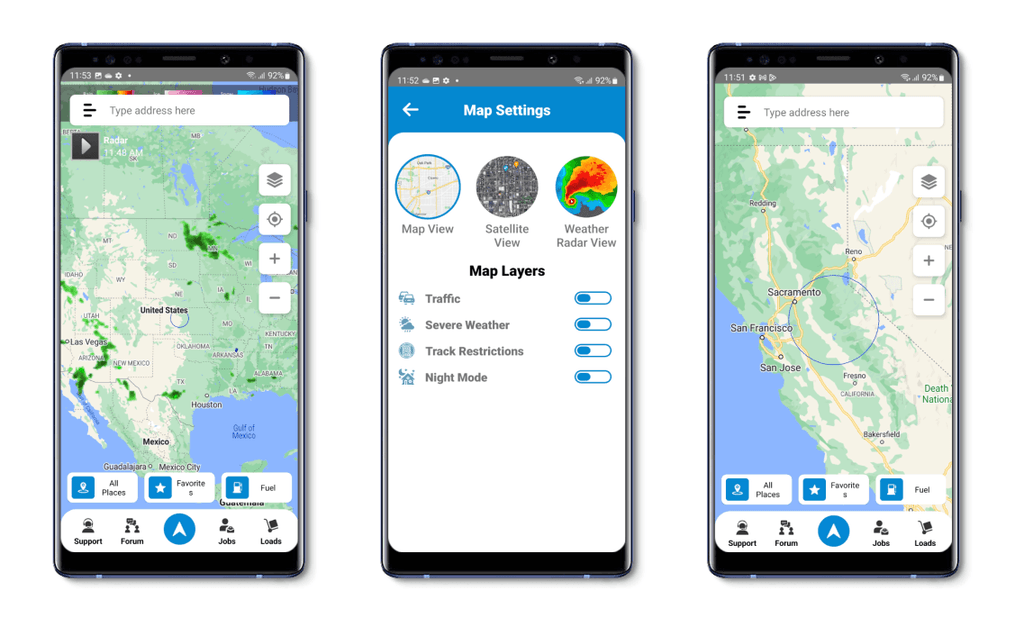
Our strongest layer is transport and integration. We move vehicle and device data in real time over MQTT, Kafka, and WebSocket, plus BLE on the device side. That’s the layer a scheduler’s inputs travel through.
Weighing whether to put forecasting into your own product? Our fleet management software development services team can scope step 2 and step 4 separately. For the wider build, see our guide to fleet management software development.
Questions & Answers
FAQ
Do I need machine learning to schedule fleet charging?
Usually not. If your overnight energy needs sit under what the window and the power cap allow, deadline sorting solves it. Machine learning becomes useful when demand is uneven and you need tomorrow’s answer today.
What is the difference between smart charging and predictive charging?
Smart charging reacts: it shifts sessions and adjusts power based on what’s happening now. Predictive charging forecasts first, then schedules against the forecast. Smart charging is the common name for what the US DOE calls smart charge management. Predictive charging has no standard definition.
Which OCPP version supports charging profiles?
Both OCPP 1.6 and 2.0.1 do. In 1.6, the Smart Charging profile lets a central system send power or current limits over time to each charger. OCPP 2.0.1 keeps that and adds ISO 15118 support, so the vehicle can report its departure time and energy need. That only works when both the vehicle and the charger support ISO 15118, and many depot vans on AC chargers don’t yet.
Can predictive charging software cut demand charges?
Partly. The main lever is load management, which caps simultaneous draw. Forecasting adds value when the peak is hard to predict: a shared depot, or variable duty cycles. On a flat load, a cap and a rule do the same job.
Does predictive charging work with a mixed OEM fleet?
Only after you harmonize the data. Different manufacturers report state of charge differently, so the same number can mean different things. That work usually takes longer than the model.
Can I start forecasting with less than a year of data?
Yes, on fixed routes where energy per route barely changes. Temperature is the gap: a model trained on summer data misjudges winter. Keep a bigger reserve until you have a full year of consumption.