
Having a business analyst on board reduces the risk of failure from unclear scope and goals. It also helps avoid rework, streamline processes, align results with expectations, and boost productivity in many other ways.
Business analysis outsourcing may be a solution for companies that are not ready to hire a BA in-house for whatever reason. For example, you lack a budget for a long-term hire or only need occasional help with business analysis. A third-party vendor can staff people with relevant experience and skills to assist with the necessary tasks and build the product you want.
If you consider hiring an external BA, learn when and how to outsource business analysis from our blog post. Read about the available cooperation models, best practices, and outsourced business analysis cases from Volpis.
What is business analysis outsourcing, and what can be outsourced
Business analysis outsourcing is hiring an external BA specialist to analyze the project, outline requirements, document business processes, and align the software development process with a software business model. The most common reasons for business analyst outsourcing are a lack of in-house BA expertise, the need to speed up delivery, and cost savings. Hiring someone remotely is more cost-effective and faster than building the necessary skills within the company. Moreover, business analysis outsourcing makes staffing more flexible, as you can choose part-time engagement or collaborate for a predetermined period.
The typical business analysis services to outsource include:
- Translating vision into actionable goals and user stories;
- Facilitating elicitation sessions and backlog refinement with the team;
- Managing and updating requirements as the product evolves.
Read more about business analysis uses at different stages of software development in our guide.
Signs your project requires business analysis outsourcing
Why doesn’t every company have a BA in its team, despite its massive benefits? Many believe they can replace a BA by assigning the business analysis tasks to existing team members. Startups usually don’t have the resources to keep a BA on their team. Larger companies often underestimate the business value of expert business analysis.
It’s true that sometimes you can complete a project without a BA, especially when it’s small or well-defined (e.g., a landing page or a static website). However, in many other cases, you can win a lot from having an analyst on board.
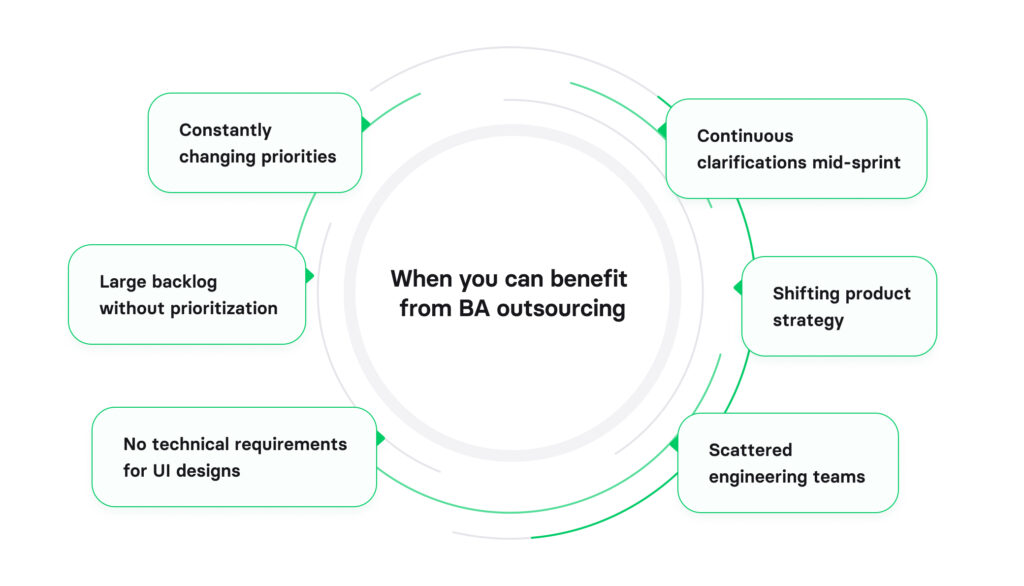
Here are the main signs your project would benefit from business analysis:
- Uncontrolled change of priorities. Outsource business analysis to an external provider if you make changes several times per week, and the delivery is too chaotic. The BA will manage communication among stakeholders and prioritize tasks based on actual business impact.
- Large backlog without prioritization. Get help turning never-ending tasks into a well-planned roadmap. A BA will determine what is the most important and map features to business goals.
- UI designs without technical requirements. Hire a BA to connect Figma designs with real functionality and document the product logic, flows, and rules.
- Continuous clarifications mid-sprint. Have detailed documentation before developers start to avoid confusion and delays later on.
- The product strategy is shifting. Align changing business goals with product development by using outsourced business analysis services. A BA will revisit the scope and requirements to guide your engineering team.
- Teams across multiple time zones and locations. If your engineering team is scattered across different locations, having a BA can better coordinate them, preventing duplicate work and inconsistencies.
Read a detailed guide on the 10 signs your software project needs a dedicated business analyst for more insights. These signs mean something is going wrong with your project, and hiring a business systems analyst for an outsourced operations role is a must.
Business analysis outsourcing models to choose from
Hiring a dedicated specialist is not the only business analysis outsourcing model. You can request a BA on demand for single-service engagements, such as documenting requirements or conducting a project audit, or have a BA within a remote engineering team. Here are the main outsourcing approaches and when to use them:
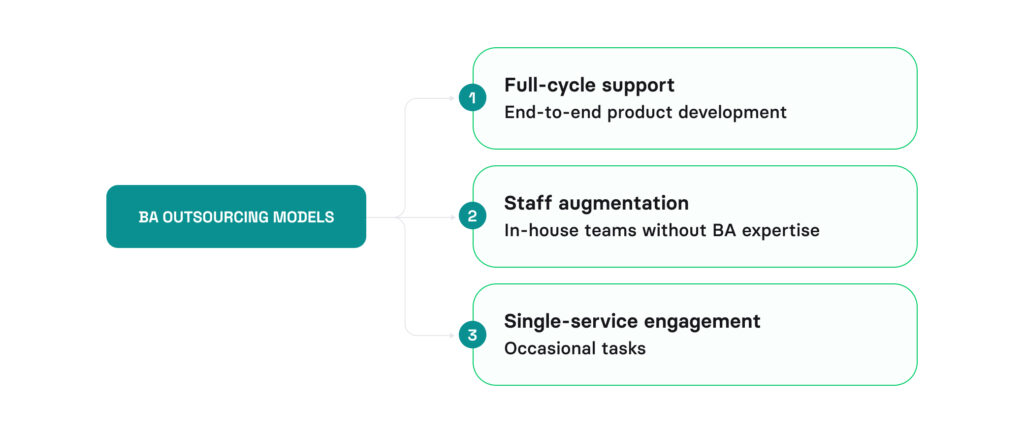
Full-cycle BA support
You hire a BA within a remote product development team that works on the project end-to-end. They run an initial feasibility analysis, manage documentation and backlog across the software development cycle, handle change and risk control, and communicate with stakeholders to align the SDLC with strategic goals.
Best for:
Companies that hire a remote engineering team to develop a product from the ground up and need a BA to run the discovery, make the development process better coordinated, and avoid rework.
Staff augmentation
An outsourced business analyst becomes a part of your in-house team and integrates into your existing workflows. You can hire them at any stage of the software development project to manage changing scope and optimize delivery. It’s a staff augmentation model, which implies temporary cooperation. You receive custom BA deliverables adapted to your company’s needs and work with a BA for as long as needed.
Best for:
Existing engineering teams that lack in-house BA expertise and face issues such as delivery friction, changing requirements, and project delays.
Single-service engagement
This type of cooperation model is for on-demand requests. You may need product conceptualization to validate the idea before development, or request an independent audit to see project blockers. A business analyst joins your project to complete a specific task and provide the related deliverables.
Best for:
Companies that need help with one or several tasks and don’t view long-term cooperation as an option. This model may also be suitable to test business analysis services with a new vendor before a more comprehensive collaboration.
Tips to make business analysis outsourcing work
Outsourced business analysis requires a slightly different approach to recruitment and staff management than having a BA in-house. You must carefully select the vendor, specify the scope of services, and follow other best practices listed below.
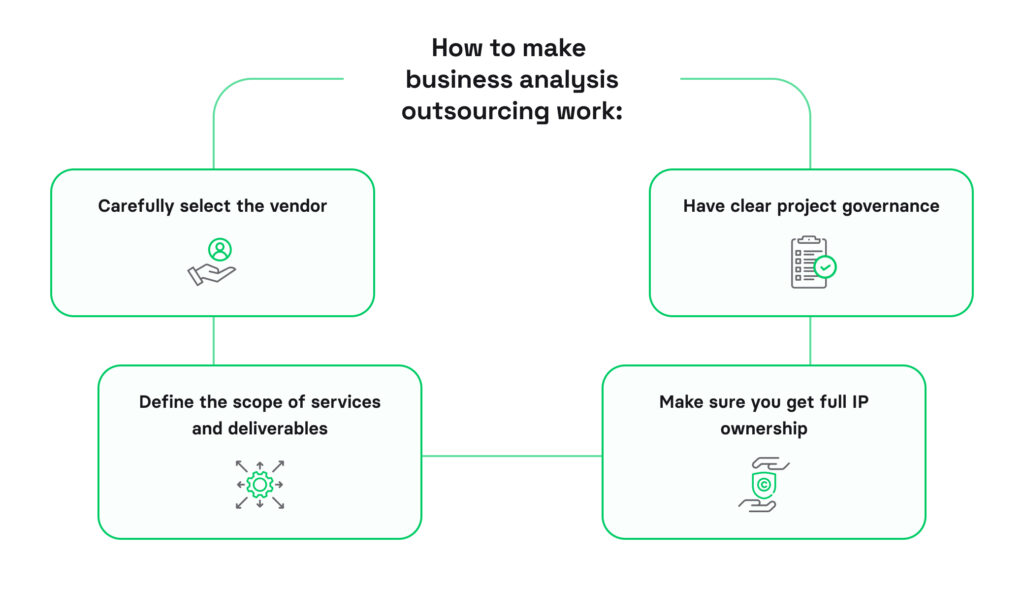
Carefully select and analyze the vendor
Gather information about several vendors by analyzing their BA expertise and completed projects. Make sure they have experience with business analysis outsourcing and look for verified reviews on platforms like Clutch. Then, shortlist the most suitable vendors and talk to them directly.
Most engineering outsourcing companies offer free consulting to let potential clients ask questions and learn more about the services. Receive quotes from two to three vendors and move forward with the one that seems the best fit.
Once you start collaboration, the initial months, the initial months are critical for evaluating whether the selected vendor knows what they are doing. Keep a close eye on their:
- Domain knowledge and industry experience. You can tell by whether they are giving practical advice and seem confident in their decisions.
- Approach to organizing work. Make sure the vendor clarifies the BA’s role and responsibilities, asks about your expectations, has a clear plan from the outset, and tells you the next steps.
- Continuous communication. They should regularly update you on task statuses, timelines, and blockers. Good vendors also ask about feedback and approve gathered requirements.
- Focus on business value. The business analysis must meet specific goals discussed at the start and with any major strategy change.
Define the scope of services and deliverables
Clarify what you expect from business analysis outputs to establish accountability. You should have clear contractual and service-level agreements (SLAs) that specify the scope, services, deadlines, and deliverables. It’s also necessary to outline quality standards and success criteria, as well as what happens if the outsourcing vendor fails to meet them. Also mention communication channels, reporting requirements, and security measures in the agreement. It will make the collaboration much smoother and ensure transparency from the start.

“I recommend assigning a person who would be a point of contact and manage interactions between the vendor and stakeholders. Prepare your stakeholders for what is going to happen. Tell them a BA may contact them to clarify project requirements and share their expert opinion. Participating in reviews and demos to share feedback also helps a lot. And, most importantly, immediately tell the vendor about any project changes affecting their work.”
– Liliia Hos, Senior Business Analyst at Volpis
Have clear project governance
If you don’t have a project manager yet, assign one. It’s better to have a PM from the start to implement project governance. Each team member should have clear roles and responsibilities, including an outsourced business analyst. It helps to understand where the BA can be the most useful and facilitates communication across departments for requirement analysis and planning.
Make sure you get full IP ownership
When using business analyst outsourcing, be sure to retain 100% of the intellectual property rights. Include the clause that outlines the IP transition in your vendor agreement. You must prohibit uncontrolled information sharing, restrict reuse with other clients, and require deletion or return at the end of the project. Remember to also sign a Non-Disclosure Agreement (NDA) at the outset to prevent information leakage and protect your rights.
Real cases of how business analysis outsourcing can be useful
The Volpis team tailors the scope and format of business analysis to each project’s unique needs. We offer BA as a separate service or build dedicated teams with business analysts for end-to-end development. The following projects have required business analysis at different stages and for different goals. Learn more about them to understand how business analysis outsourcing can work for you.
Landscape design app
A landscape architect launched a startup called Vera to simplify landscaping for regular users with 3D visualizations. The company had a UX/UI design, but wasn’t ready to start development. They wanted an independent opinion and honest advice on what can be improved.
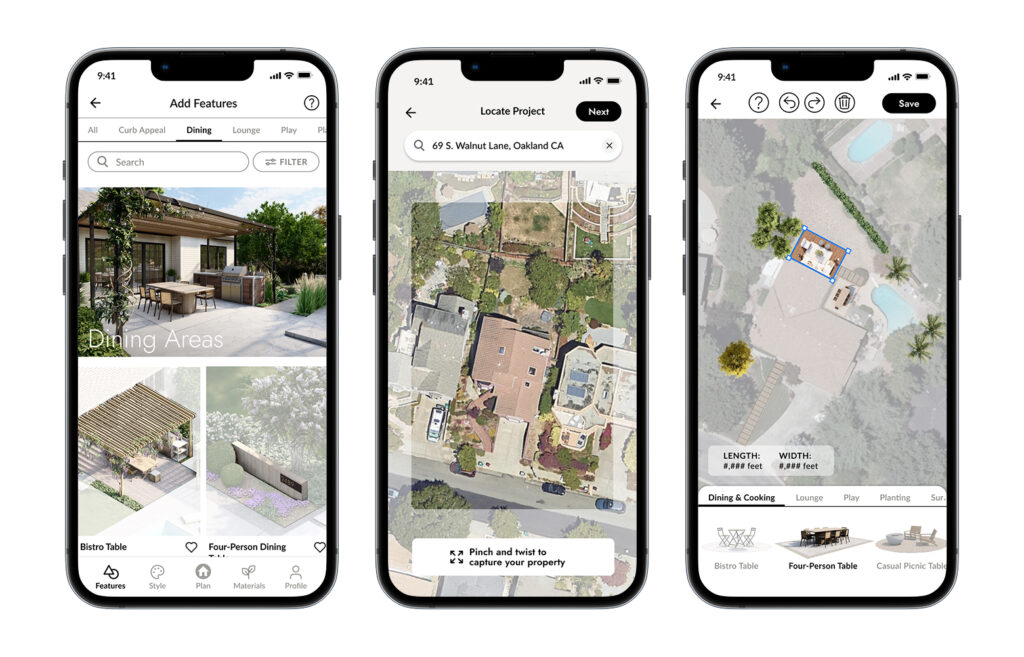
Our business analyst joined the project and had elicitation sessions with the client to clarify the requirements. They reviewed the design, detected gaps in user flows, and created functional specifications for the next project stages. The BA was a part of a larger engineering team on our side that continued the development, turning a raw idea into a live product.
Platform for studying the Quran
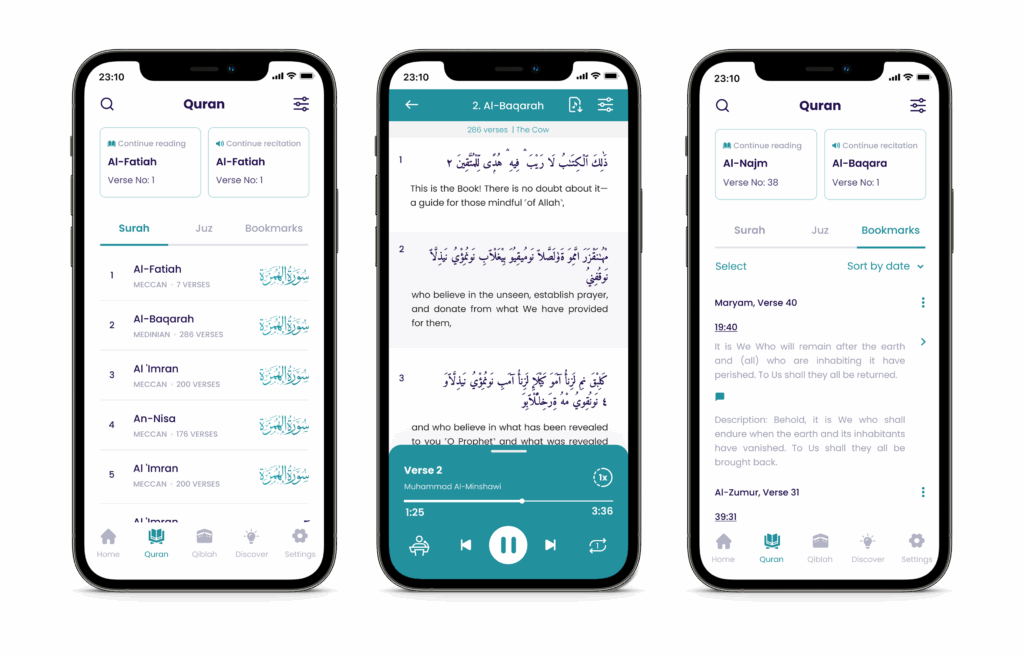
This project started with software maintenance services for a popular non-profit mobile app that provides accurate knowledge about Islam and helps study the Quran. After several years of successful cooperation, the client engaged a business analyst to work on new features. After communicating with the client’s team and gathering feedback, it became clear that the mobile app required a comprehensive upgrade. The legacy architecture was a roadblock to fixing some issues, and the UX needed improvements. Our BA ran a UX survey to validate the need for a redesign and created a backlog to streamline the engineering team’s next steps.
Fleet management solution
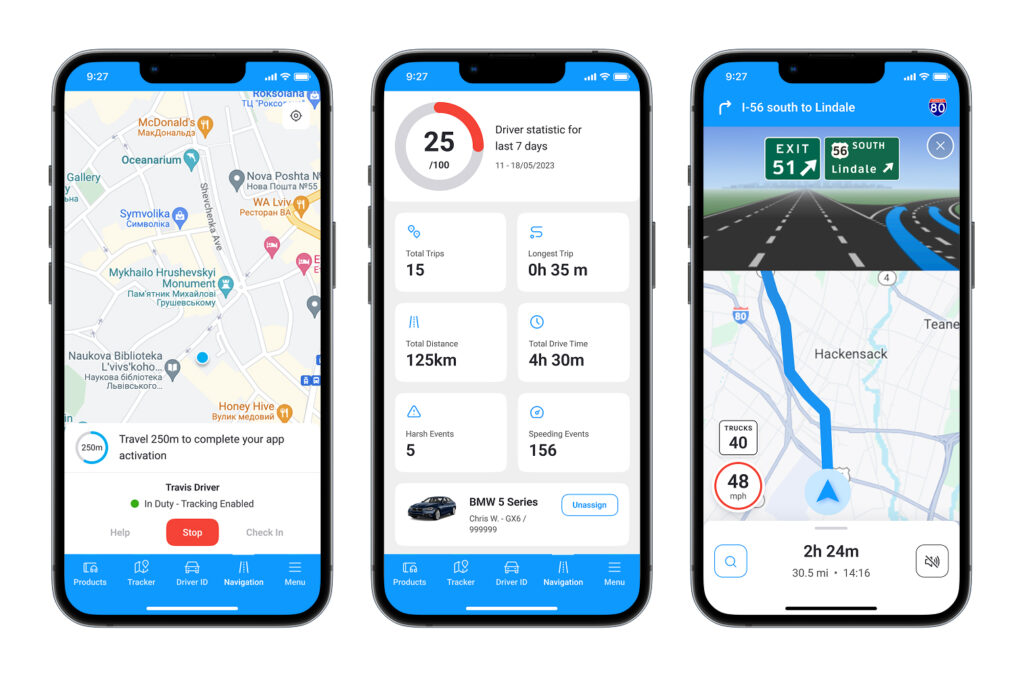
RandMcNally hired a dedicated engineering team to build software that could replace hardware-based fleet tracking systems. Volpis provided a business analyst to evaluate the existing infrastructure and design, and offer a new solution based on stakeholders’ requirements. Our BA outlined the technical framework for developing an app that tracks a fleet using native mobile capabilities. The BA also helped facilitate another issue – the backlog was constantly changing and often blocked due to simultaneous backend development. The business analyst prioritized tasks for different departments, which allowed the team to work more effectively and set an approximate release date.
Questions & Answers
FAQ
What does a business analyst do?
There is a misbelief that a business analyst is someone who just gathers information from stakeholders and turns it into requirements. Requirement elicitation is an important part of a BA’s role. Still, they do much more, including facilitating communication between multiple teams, validating product ideas, mapping business logic, and supporting development and testing processes. They also ensure each chance brings value by exploring the positive and negative impacts of potential transformations.
At what project stages is it better to outsource business analysis?
We recommend hiring a business analyst at the start to validate the product idea, run competitor analysis, and define business goals, risks, and requirements. Nevertheless, you can benefit from BA services across the entire software development cycle. Business analysts help validate designs, coordinate usability testing, handle scope management and prioritization, and measure product success post-release.
Does business analysis outsourcing help cut expenses?
Yes, business analysis outsourcing optimizes expenses in two major ways. First, outsourcing is a cost-effective alternative to hiring in-house, as you don’t need to commit to long-term contracts, and rates are usually lower. Second, having a business analyst on your team reduces rework, speeds up development, and redistributes resources more efficiently, additionally cutting engineering expenses.