What experience do your ARCore developers have?
Our ARCore developers have 5+ years of AR experience and ship native Android apps alongside it. They’ve worked on motion tracking, augmented faces, augmented images, the Depth API, Cloud Anchors, and the Geospatial API in production, including face tracking for a social platform serving thousands of concurrent users. We match developers to your project based on the AR capabilities and the industry it needs.
How much does it cost to hire ARCore developers?
$30–$40/hour on average. But it depends on the engagement model and the seniority you need.
For the model, you can engage:
– hourly
– on a fixed scope
– with a dedicated team
As most products only need deep AR expertise during AR sprints, many clients bring in our developers for that work.
How long does it take to start working with your ARCore developers?
Usually, 1–2 weeks from the first call. In that window, we finalize scope, match the right ARCore developers, and agree on the engagement model and timeline. For urgent requests, we can speed up the process.
Can I scale my team of ARCore developers as my project grows?
Yes. With our flexible engagement models, you can scale your development team based on your project’s needs. Whether you require additional ARCore developers, 3D designers, backend engineers, project managers, or a complete ARCore development team, we can quickly adjust to support your goals.
What is the best way to hire ARCore developers?
When you hire the ARCore expert, look for hands-on production experience. A strong developer will understand the limitations of tracking, device fragmentation, and Android-specific constraints. Ask to see a portfolio of shipped apps. After you choose the engineer, start with a defined first piece of work to judge the process.
What is ARCore used for?
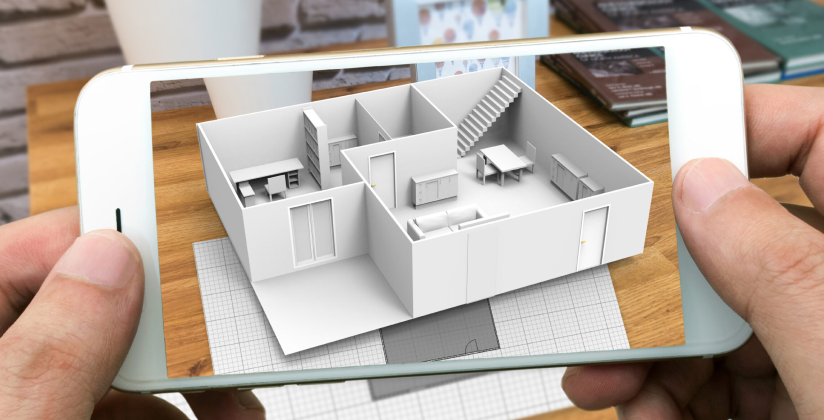
ARCore is Google’s augmented reality SDK for building AR experiences on Android. It uses several mechanisms:
– Motion tracking to follow the device’s position.
– Environmental understanding to detect real-world surfaces.
– Light estimation to blend virtual objects into a scene.
ARCore is used across retail try-on, AR navigation, gaming, education, real estate, and many other industries.
How does ARCore work?
ARCore uses the phone’s camera and motion sensors. By tracking feature points frame to frame, it detects how the device moves. It detects flat surfaces and their boundaries (plane detection), and estimates lighting so digital content looks like it belongs. The Depth API adds distance awareness, so virtual objects can be realistically hidden behind real ones.
Is ARCore free?
ARCore is free to build with. There’s no licensing fee for the SDK. Features that rely on Google’s cloud services have a free tier with usage-based pricing above it. So for features like the Geospatial API and Cloud Anchors, cost scales with usage.
Does ARCore work on iOS?
Partly. ARCore’s motion tracking and Cloud Anchors can work on iOS via Google’s ARCore SDK. But the full functionality is available only on Android. For the iPhone, many teams have to combine ARCore with Apple’s ARKit.
How is ARCore different from ARKit, and when should you choose ARCore?
ARCore is Google’s AR platform for Android. ARKit is Apple’s platform, built for iOS. So if your primary audience is on Android, choose ARCore. It will provide broad device coverage and Google ecosystem features, such as the Geospatial API. If your audience is iOS-first, ARKit is a go-to. Many products end up using both.