What is ARKit, and why is it ideal for AR development?
ARKit is Apple’s augmented reality framework for iOS – the toolkit that lets an iPhone or iPad understand its surroundings and convincingly place digital content in them. In practice, that covers object recognition and detection, face tracking, image recognition, plane detection, and – on Pro devices – LiDAR depth scanning. It’s what sits behind AR features in retail, gaming, real estate, interior design, and training apps. The catch: ARKit hands you the building blocks, not the finished product. Getting tracking stable and performance smooth on real devices is the hard part, and that’s where an experienced developer actually earns their fee.
Can you use ARKit for web applications?
Not directly – ARKit is a native iOS framework, so it runs inside an app, not a web page. You can still put AR on the web, though: Apple’s AR Quick Look lets people view and place 3D models (in USDZ format) straight from Safari on an iPhone or iPad, with nothing to install. For anything more interactive – live tracking, face effects, custom logic – you’ll want a native app built on ARKit, or WebXR if you specifically need AR running in the browser across platforms. We can help you weigh which route fits.
Does ARKit work on Android?
No, ARKit is Apple’s augmented reality framework and runs only on iPhone and iPad – it does not work on Android. For augmented reality on Android, the equivalent framework is Google’s ARCore. Volpis specializes in ARKit for iOS, and our team can also advise on cross-platform AR strategy if you need to reach both ecosystems.
Which devices support ARKit and LiDAR?
ARKit is supported on iOS devices running iOS 11 or later, but the full capabilities depend on the device. Features like LiDAR-based augmented reality are available on devices equipped with a LiDAR scanner, such as the iPhone 12 Pro, iPhone 13 Pro, iPhone 14 Pro series, and newer iPad Pro.
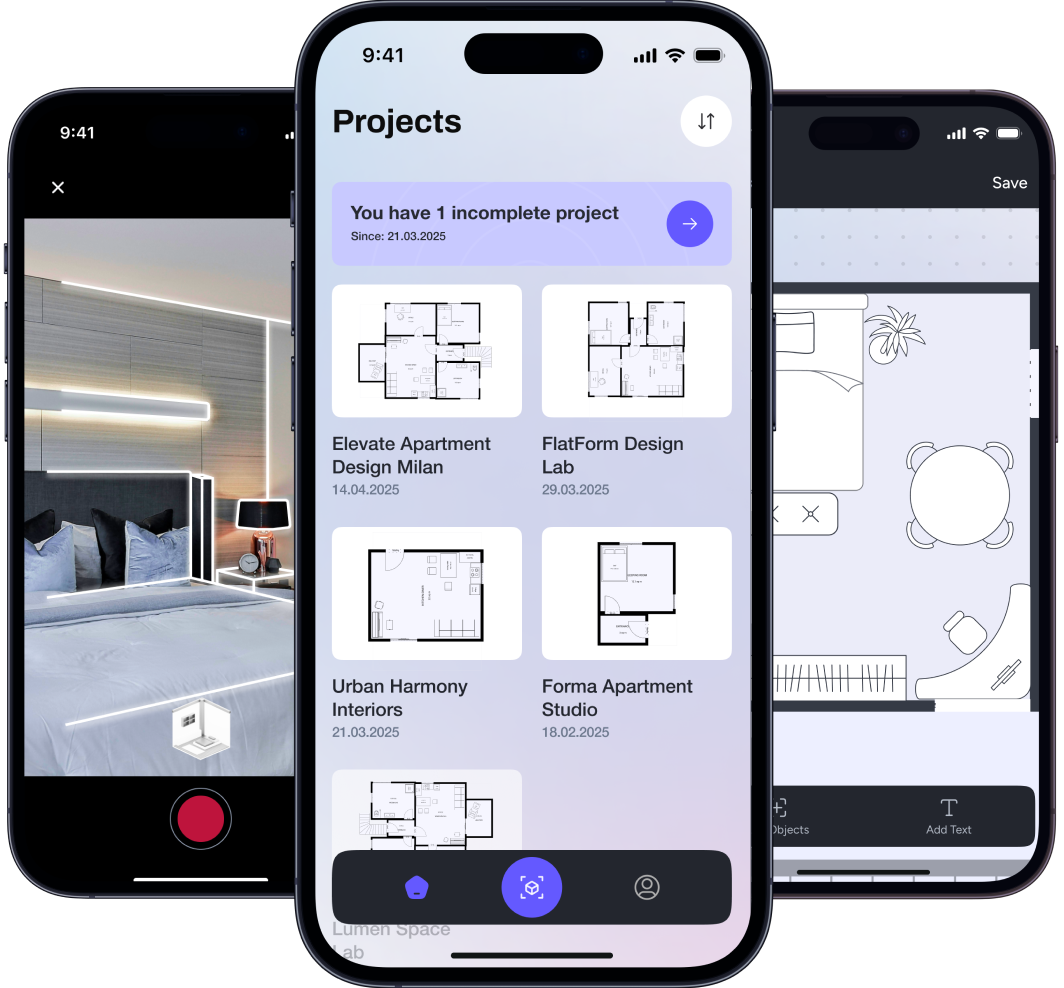
With LiDAR technology, our ARKit developers can create highly accurate AR applications that leverage depth sensing and environmental understanding. This opens up new possibilities for immersive augmented reality applications, from virtual furniture visualization to real-time 3D mapping.
What experience do your ARKit developers have?
Our ARKit developers have 7+ years of experience on average, specializing in building AR solutions tailored to various industries. They are skilled in technologies like ARKit, RealityKit, SceneKit, Vision, Core ML, and RoomPlan and have successfully delivered AR applications for use cases such as e-commerce visualization, interior design, and training simulations.
Our ARKit developers are well-versed in scaling AR applications as your project grows, allowing for flexibility in both features and performance. Whether it’s for startups or established enterprises, our team has the experience and know-how to meet your needs.
How much does it cost to hire an ARKit developer?
$30–$40 per hour. However, the cost of hiring an ARKit developer depends on three factors: project complexity, engagement length, and whether you need a single specialist or a full AR team.
With our no-risk trial period, you can assess the developer’s skillset and fit for your project before making a full commitment.
Can your developers integrate into our internal team?
Yes. Our ARKit developers can work as a dedicated extension of your in-house team – joining your standups, sprints, and tooling – or deliver a fixed-scope project end to end. We adapt to your workflow, communication cadence, and project management process rather than imposing our own.
How quickly can I start working with your ARKit developers?
In most cases, if you hire ARKit engineers at Volpis, they are onboarded within 1–2 weeks after the initial call. Because our augmented reality engineers are in-house rather than sourced on demand, there’s no lengthy recruitment cycle. We map your requirements to an available specialist and run a short alignment call.