
About the client
Meet our client,
Purple
Founded in 2012 to address unreliable guest Wi-Fi, Purple has grown into a global company offering digital engagement and indoor location solutions.
Today, Purple works with thousands of brands worldwide, including McDonald’s, Walmart Canada, and Michael Kors.

Industry
Digital connectivity

Location
based in the UK
13+
years on the market
80K+
venues onboard
ABOUT THE PRODUCT
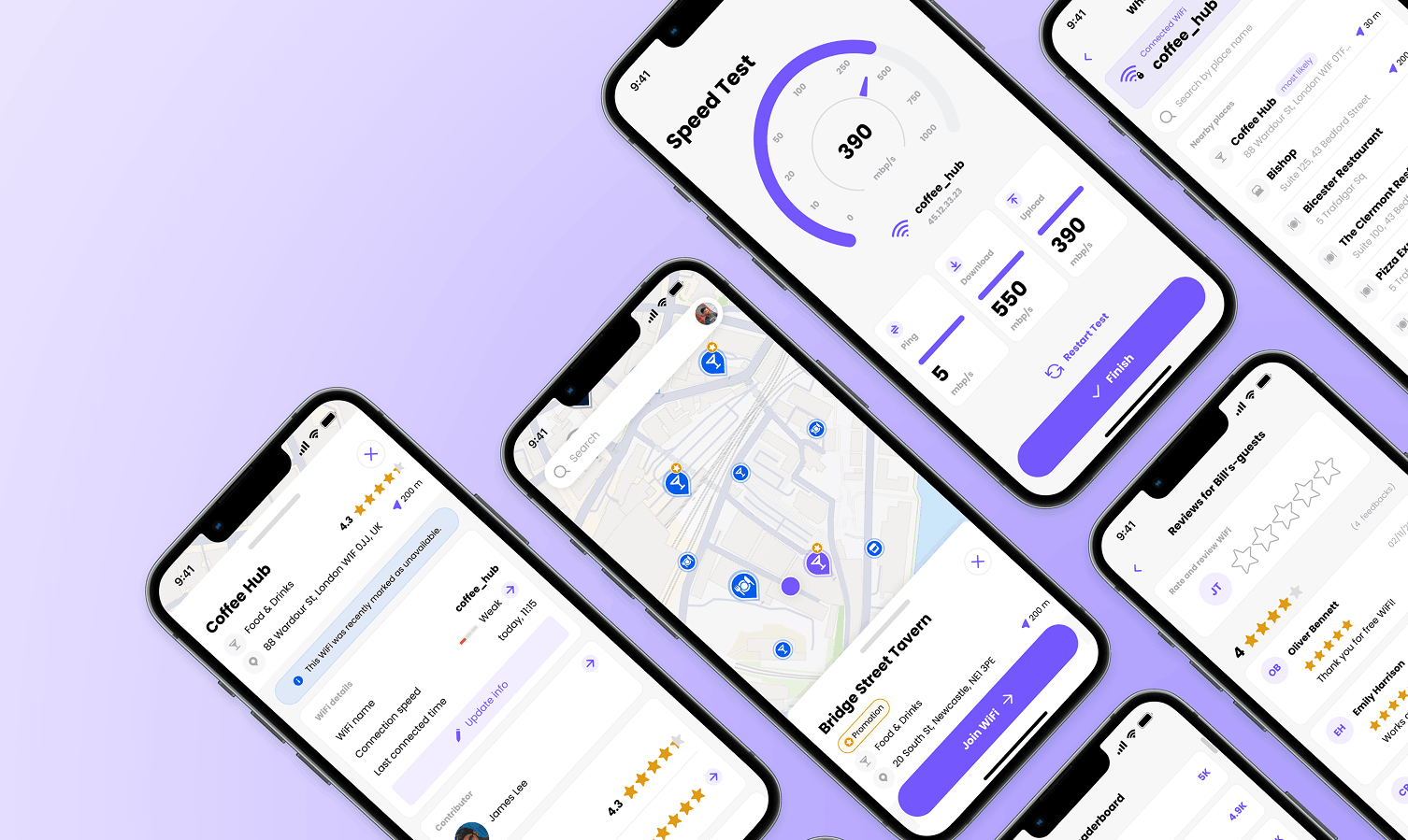
Purple ConneX is a mobile app for discovering verified WiFi 🛜 hotspots around you 🗺️
Instead of relying on a fixed database, the app uses user contributions to keep WiFi data relevant. Users add hotspots, rate their quality, and help maintain accurate information that enables faster connections.


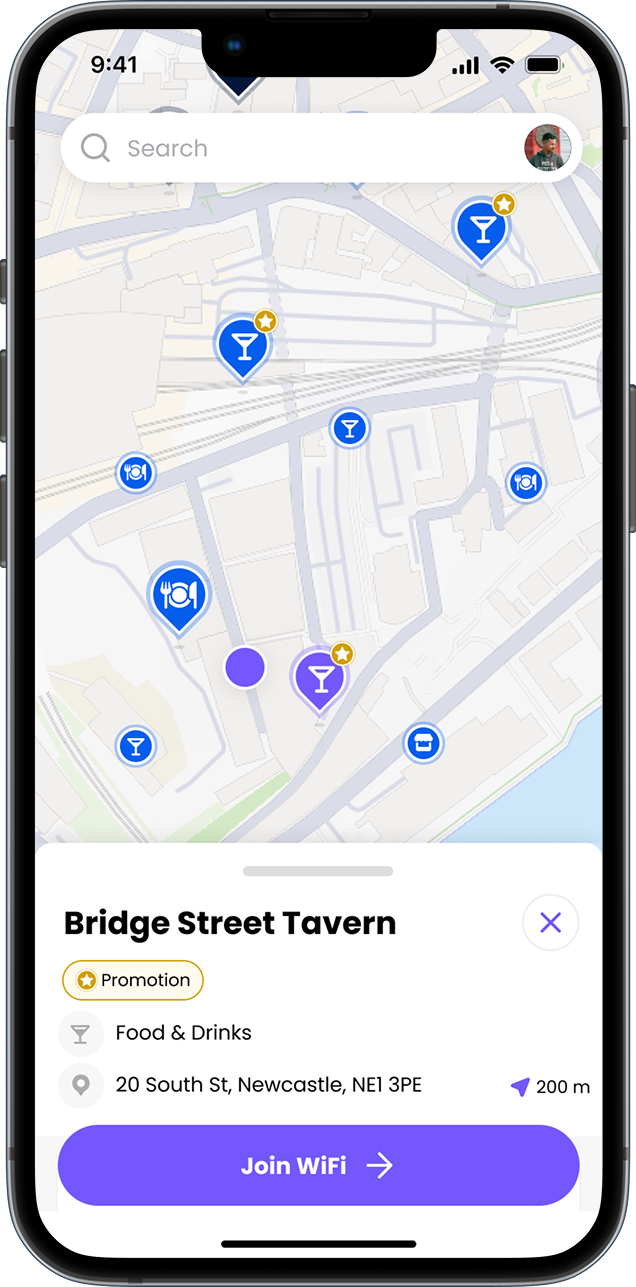
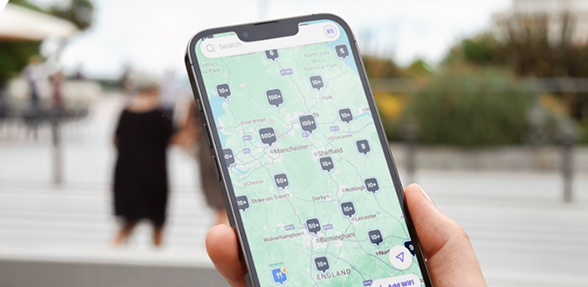

With Purple ConneX, users can:
- Discover verified Wi-Fi hotspots nearby.
- Get instant notifications near a network.
- Filter hotspots by speed, venue type, cost, and more.
- Auto-fill Wi-Fi passwords for one-tap connection.
- Store networks for low-data situations.
PROJECT GOAL
Goal of the project
Initially, ConneX was envisioned as a marketing-driven product – helping users easily discover nearby WiFi networks while increasing visibility for Purple’s clients through crowdsourced hotspots.
Over time, this vision evolved. ConneX became part of Purple’s core business ecosystem, shifting its focus to secure, compliant, and seamless connectivity for end users. At the same time, it enables Purple’s clients to work with verified data, maintain stronger control over network access, and rely on consistent security standards.

CHALLENGES AND SOLUTIONS
Challenges we faced
Evolving product scope & prioritization. The product vision evolved during development: new ideas emerged, priorities shifted, and user feedback continuously influenced scope. This risked slowing delivery and reducing focus.
We introduced a structured scoping and prioritization process, supported by a unified UAT log shared across the team. Regular review sessions helped group feedback, assess business value, and plan refinements as part of ongoing iterations rather than ad-hoc changes.
OS-level constraints on core functionality. Key functionality of Purple ConneX depended heavily on OS-level permissions, APIs, and hardware behavior. Several expected features were limited or blocked by platform restrictions, making standard or automated approaches unfeasible.
We ran focused technical investigations to map real platform limitations and validate behavior in practice. Based on these findings, we worked closely across product, design, and development to adjust scope, define feasible alternatives, and avoid rework later in the process.
Offline mode with large data volumes. The app needed to function offline entirely, but the hotspot database was too large to be stored fully on a user’s device without affecting performance or storage.
We implemented an optimized approach to offline data handling that minimized on-device storage while preserving access to essential map information. This allowed the app to support offline scenarios without compromising performance.
UX design for domain-specific data. Purple ConneX deals with highly specialized, domain-specific data. Presenting this information in a way that felt clear and intuitive for non-expert users was a major UX challenge.
We simplified complex data into digestible visual patterns using icons, grouped sections, and consistent layout rules. Progressive disclosure was introduced to surface essential information first, revealing details only when needed. We also relied on user feedback to validate clarity and usability.
Backend performance optimization. The backend needed to efficiently handle millions of map-based locations while supporting filtering and grouping logic without impacting response times.
We implemented backend performance optimizations focused on efficient data access and processing at scale. This ensured stable response times and reliable behavior.
IMPLEMENTATION ROADMAP
Our collaboration journey
Purple ConneX has gone through several transformation stages – from an initial proof of concept to a stable product delivered through continuous iterations. The project evolved in parallel with changes in the client’s product vision, requiring flexibility, fast decision-making, and close cross-functional collaboration.

Phase 0
Proof of Concept (PoC)
The project began with a Proof of Concept that served as the basis for the technical foundation. At this stage, the team focused on validating the most critical and high-risk aspects of the solution, including authorization flows, profile installation, and SecurePass SDK integration, on real devices and environments.
This approach allowed the team to understand platform constraints early, confirm the feasibility of the security model, and make informed architectural decisions.

Phase 1
MVP Development
After Purple shared the initial Product Requirements Document, several areas required further clarification. To address this early and reduce delivery risk, we initiated a combined discovery and product design phase involving a Business Analyst and a UX/UI Designer.
During this phase, the team refined requirements, structured the core product logic, defined key user flows, and designed a scalable product framework. In parallel, development was intentionally focused on delivering an MVP version of Purple ConneX.
The result was a stable, secure core product that Purple could share with internal stakeholders and early users, to validate real-world usage, and gather structured feedback through UAT.

Phase 2
Agile Delivery
Following MVP validation, the project moved into an iterative delivery phase focused on expanding functionality and refining the product based on feedback. This included adding new features, experimenting with rewards and engagement mechanics, and continuously improving existing flows.
Development is organized around weekly sprints, regular UAT cycles, and incremental releases. This approach allows the product to evolve in close alignment with Purple’s business direction while maintaining stability and predictable progress.
WHAT WE DID
Services we provided
Purple ConneX was built using a full-cycle, under-one-roof delivery approach, where product, design, development, and QA worked as one team to ensure consistency and momentum across all stages.

SERVICES WE PROVIDED
Business Analysis
Purple came with an initial product vision, which our Business Analyst translated into clear requirements and documentation. By establishing a shared understanding across stakeholders, BA aligned business goals, user needs, and development efforts to support confident product decisions.
What we did:

Requirements clarification & refinement
Although the client had a defined product and feature vision, many functional and logic details needed clarification. We refined requirements, resolved contradictions, detailed user interactions, and documented both functional and non-functional expectations to ensure a clear, development-ready specification.

Backlog formation & prioritization
The BA transformed refined requirements into a structured development plan: defining MVP boundaries, preparing Jira tickets with acceptance criteria, and prioritizing the backlog for upcoming iterations. This gave the team a predictable and well-organized roadmap for upcoming iterations.

Product logic structuring
We created core product artifacts that documented the system’s logic and structure. This included entity relationships, user flows, mind maps, and brainstorming boards that helped align all stakeholders and clarify how the product should operate across different scenarios.

UAT-driven improvements
As Purple ConneX relied heavily on UAT cycles, our BA analyzed over 250 feedback items from internal and external testing, identified improvement areas, suggested logic and UX refinements, and updated documentation accordingly.
SERVICES WE PROVIDED
UX/UI Design
UX/UI design for Purple ConneX focused on creating a clear, intuitive experience that feels effortless for everyday users. We turned complex flows into a simple, easy-to-follow interface, so users can understand options at a glance and act without hesitation.
What we did:

Competitor analysis
The designer performed a usability-driven competitor analysis across leading Wi-Fi, connectivity, and utility apps, uncovering key interaction patterns, usability issues, and design opportunities. These insights, combined with user feedback research, informed design decisions to align the product with modern UX standards.

Wireframing
The designer created low-fidelity wireframes to validate user flows, receive feedback from stakeholders, and quickly iterate on functionality early in the process.

Information architecture
We structured the app’s content and navigation to support clear, intuitive user flows across key scenarios.

UI design
We created a unified interface aligned with Purple’s brand. A shared UI kit defined core components, styles, and interaction rules, ensuring consistency and scalable implementation across mobile platforms.
SERVICES WE PROVIDED
Development
The development phase focused on delivering a stable, scalable solution across mobile platforms while addressing platform constraints, offline requirements, and performance challenges. Close collaboration between product, design, and engineering ensured that technical decisions supported evolving product needs without compromising quality.
What we did:

iOS App
We implemented native iOS solution, accounting for OS-level permissions, hardware behavior, and offline-first requirements. Special attention was given to performance, data handling, and user experience consistency.

Android App
The developers build a native Android application with careful handling of platform-specific APIs, background behavior, and storage limitations, ensuring feature parity while respecting OS constraints.

Backend
The team worked on scalable backend implementation optimized to handle large volumes of map-based data, enabling efficient filtering, grouping, and reliable performance at scale.
“In a dynamic project like Purple ConneX, well-organized parallel work is critical. By keeping backend 2 sprints ahead, mobile teams could move faster and avoid unnecessary dependencies.”

Technologies we used
We carefully selected a modern, scalable technology stack to support mobile development, backend performance, and reliable WiFi connectivity.
-
 SwiftUI
-
UIKit
-
MVVM + Clean Architecture


-
Kotlin
-
MVVM
-
Jetpack Compose
-
 KMP
KMP


-
Node.js
-
 Nest JS
-
Typescript
-
 Prisma ORM
-
Postgre SQL
-
Redis
-
Cron
-
Swagger


-
Google Maps
-
Google Places API
-
AppsFlyer
-
Sentry
-
FCM
-
Posthog


-
 SQLite
-
Room


-
Heroku
-
GCP


SERVICES WE PROVIDED
Quality Assurance
Quality Assurance played a key role in ensuring reliable and predictable product behavior throughout development. The QA process supported ongoing delivery by validating functionality, performance, and consistency, helping the team release updates with confidence.
What we did:

Test planning & documentation
QA defined testing scope, priorities, and acceptance criteria for each sprint, ensuring full coverage of the core functionality, edge cases, and platform-specific behaviors. Detailed test cases established a shared quality baseline across iterations.

Functional and regression testing
Core app functionality was continuously tested across iOS and Android to ensure stable behavior of WiFi connection flows, hotspot discovery, and user interactions. Regular regression testing ensured that new updates did not affect existing functionality.

Performance and stress testing
QA validated app performance under realistic usage conditions, including large map datasets, frequent data updates and live Wi-Fi environments. Hands-on testing across public and private networks helped identify bottlenecks, uncover edge cases, and improve connection reliability.
“Testing Purple ConneX went far beyond standard QA scenarios, as many critical cases couldn’t be simulated in the office. Our QA team tested the app across real networks in cafes, public spaces, offices, and other locations, uncovering edge cases related to unstable signals, varying speeds, and connection limitations. This helped to improve overall product performance before issues reached users.”

CORE FEATURES
Product Overview
Below are the core features and functionality we’ve helped creating for Purple ConneX:
CORE FEATURES
Hotspot search
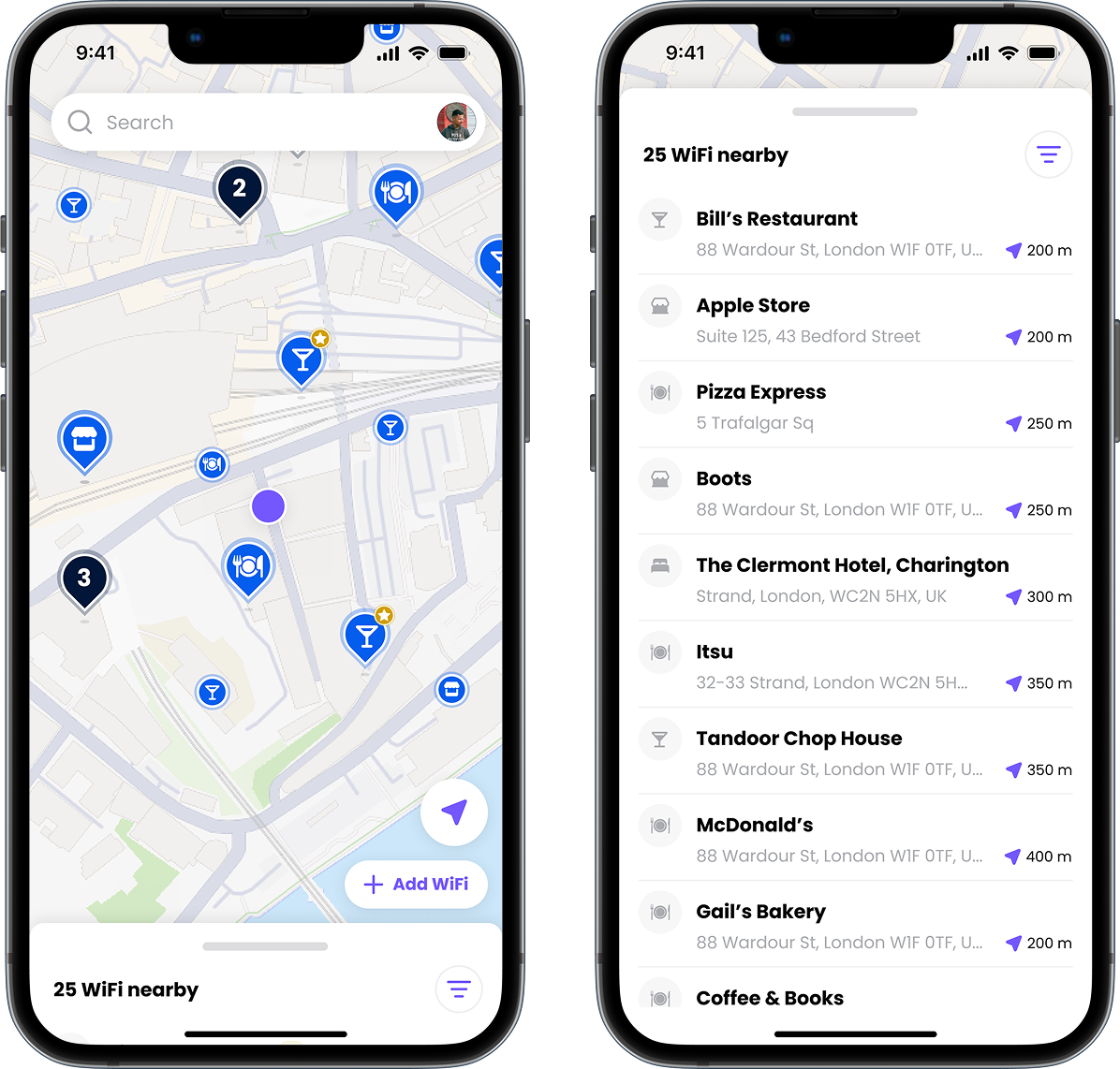
Users can find secure, fast, and free local hotspots in seconds: around current location or searching for the needed geographical area. Additionally, smart filters help pinpoint the best WiFi networks near users based on speed, security, and reviews.
CORE FEATURES
Connecting to WiFi
Users can join any network around them without manually searching for passwords or filling out forms.
When the user opens the app, it automatically suggests the best network nearby, helping users get online faster with minimal effort.
COMMUNITY CONTRIBUTIONS
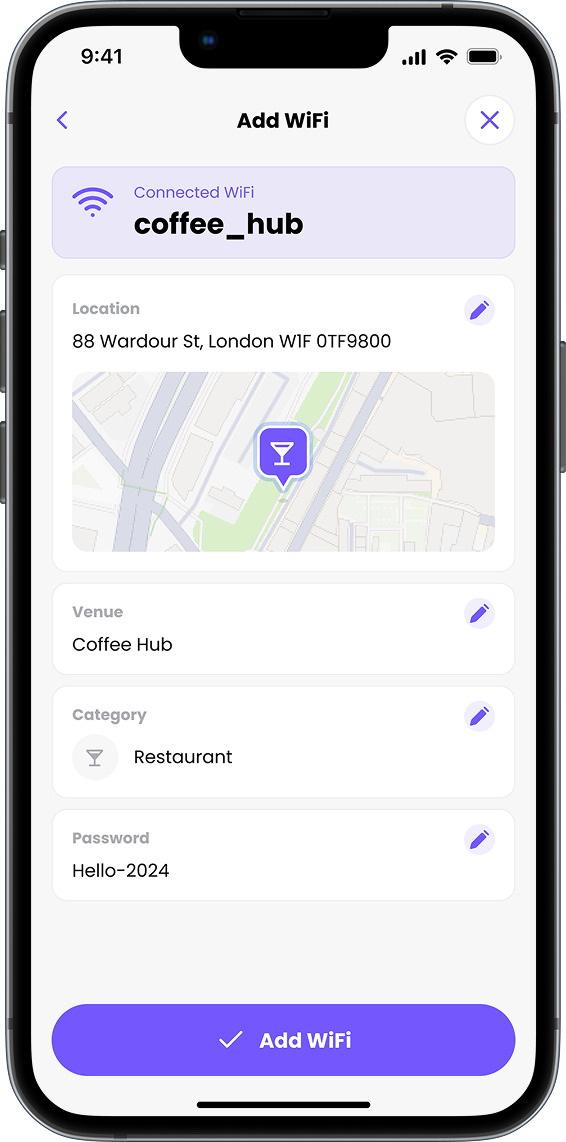
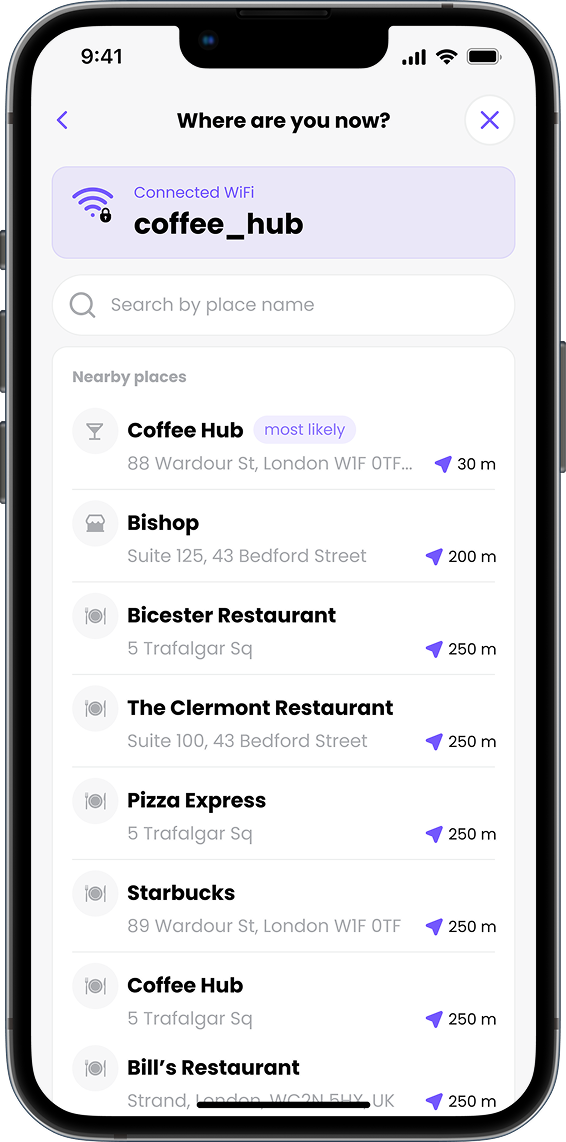
Add WiFi
If a network is missing, users can contribute by adding new WiFi hotspots, helping keep the database accurate and up to date.

COMMUNITY CONTRIBUTIONS
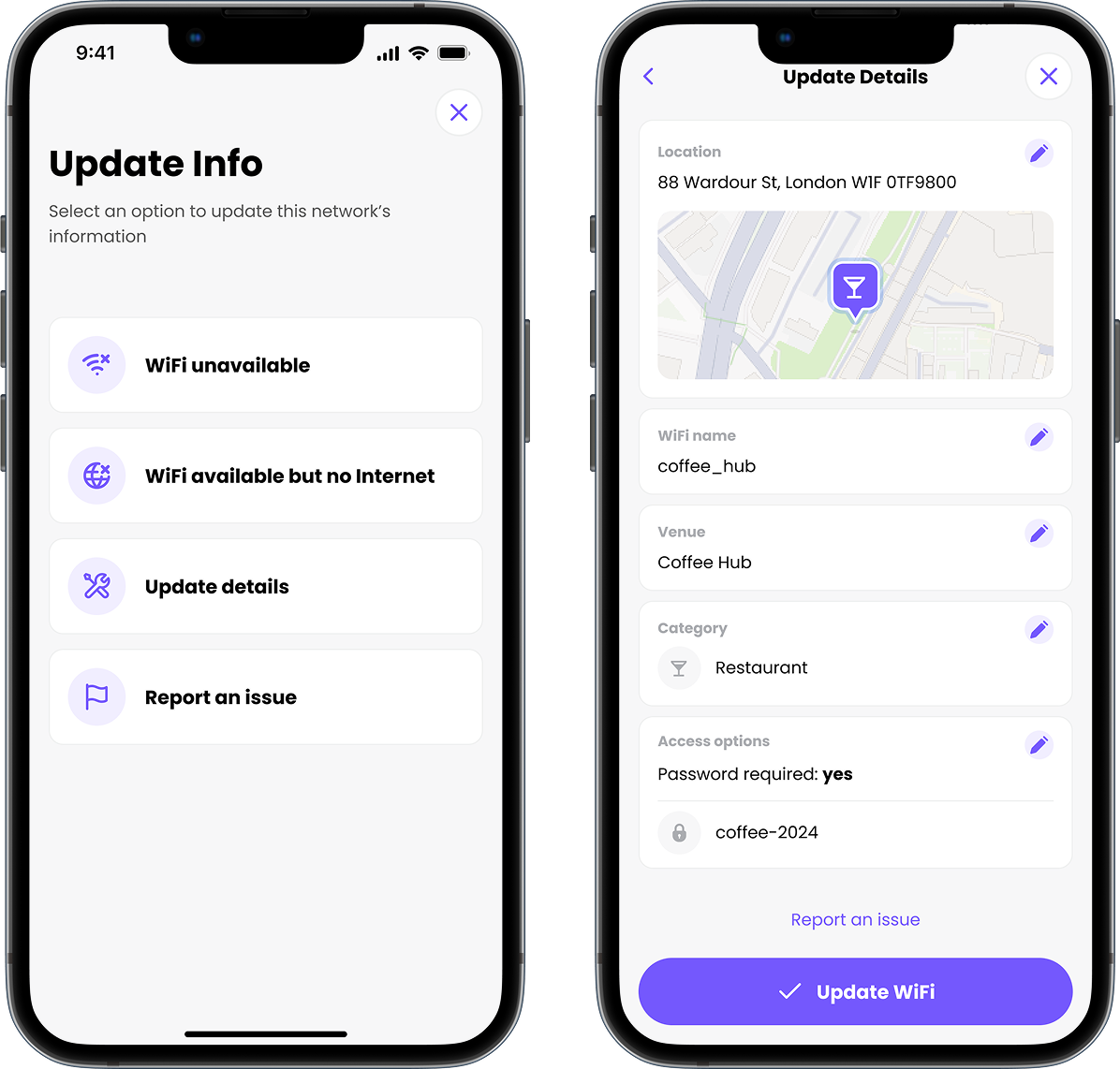
Update WiFi
Users can update existing network information if they notice inconsistencies or outdated data, improving reliability for others.
COMMUNITY CONTRIBUTIONS
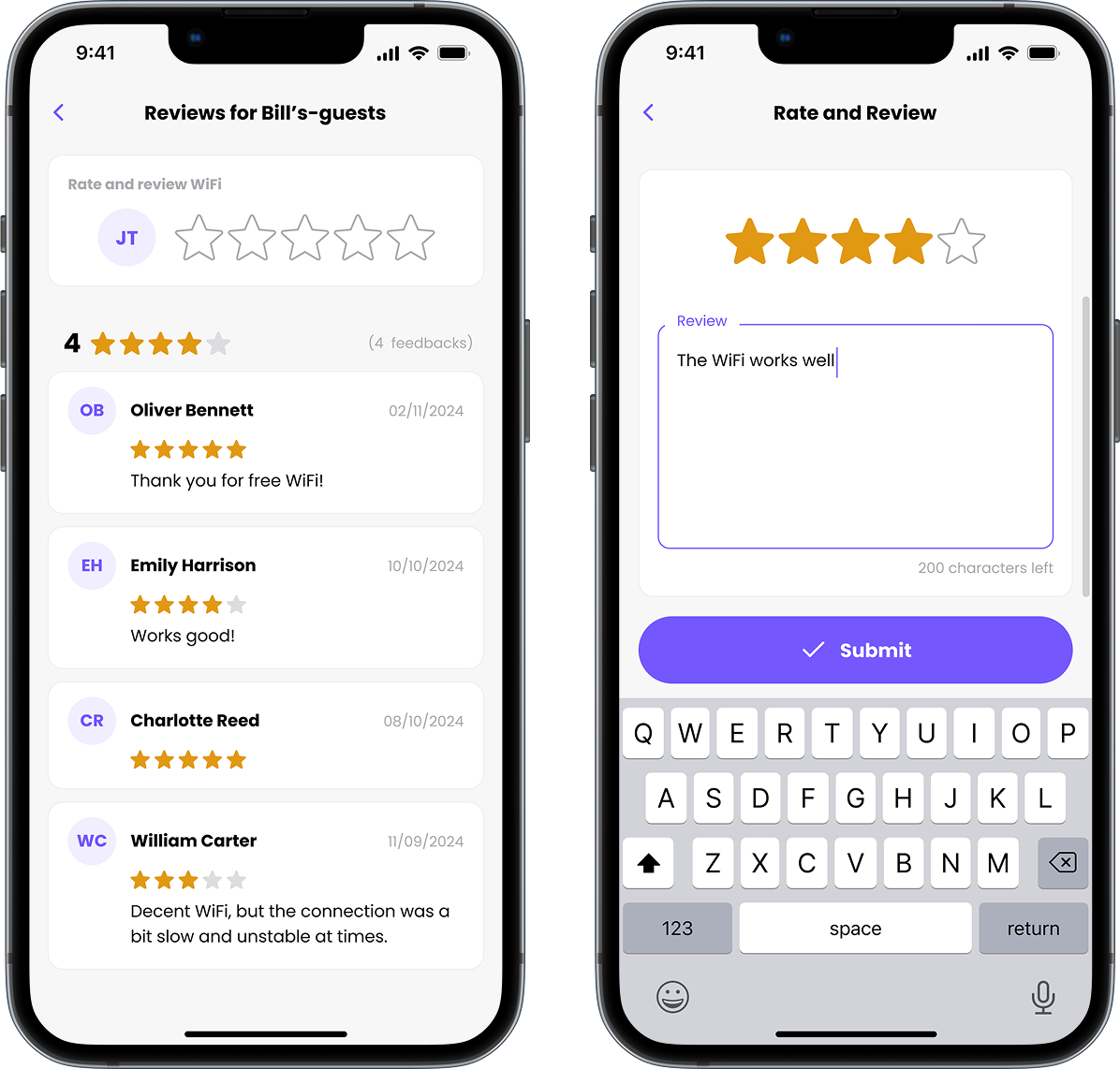
Rate WiFi
Users can rate and share their online experience of using particular hotspots with the community.
COMMUNITY CONTRIBUTIONS
Run speed test
Users can run speed tests to measure connection quality and share results with the community.
Gamification
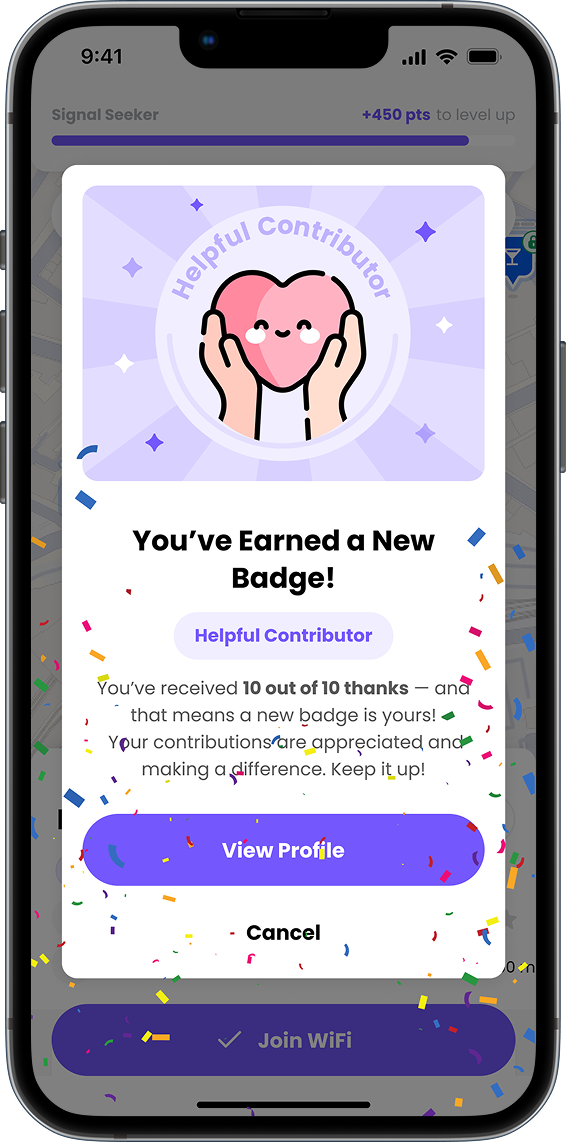
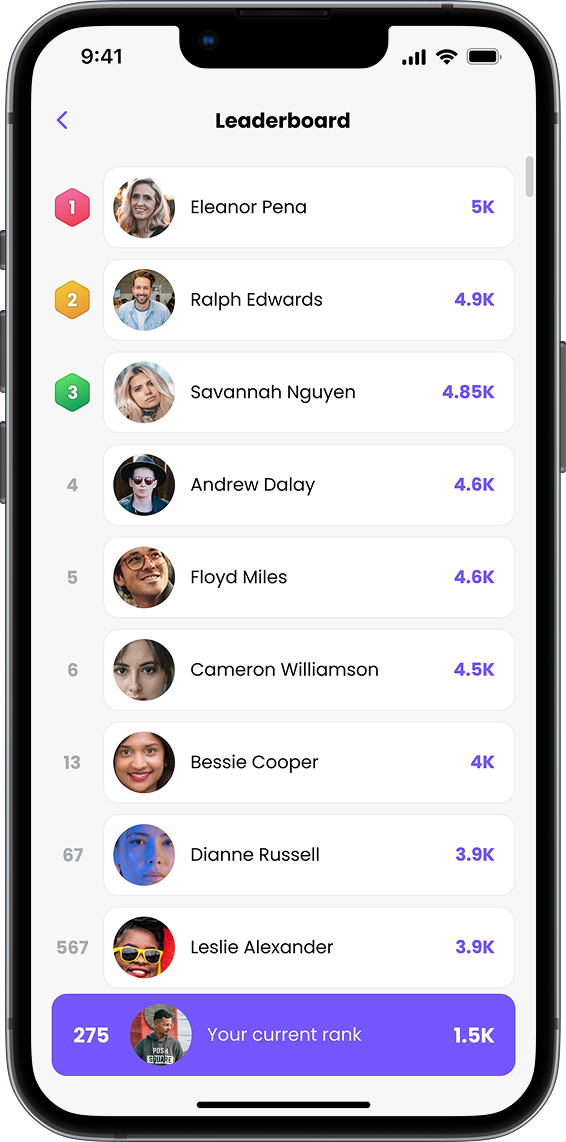
As part of the early product exploration, we worked on gamification as a way to test engagement patterns and visual feedback mechanisms within Purple ConneX.
CORE FEATURES
Gamification elements
We designed and implemented a set of gamification elements, including badges, icons, and animated states.
Although these elements were not released due to a shift in product priorities, they helped shape the app’s visual language and interaction patterns.

GAMIFICATION
Egg Hunt
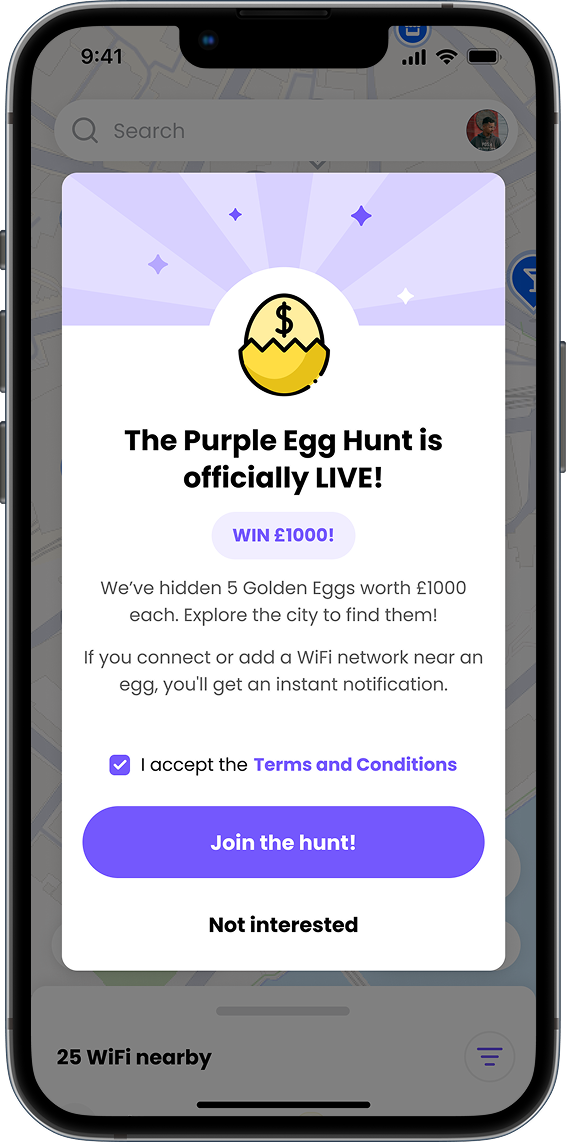
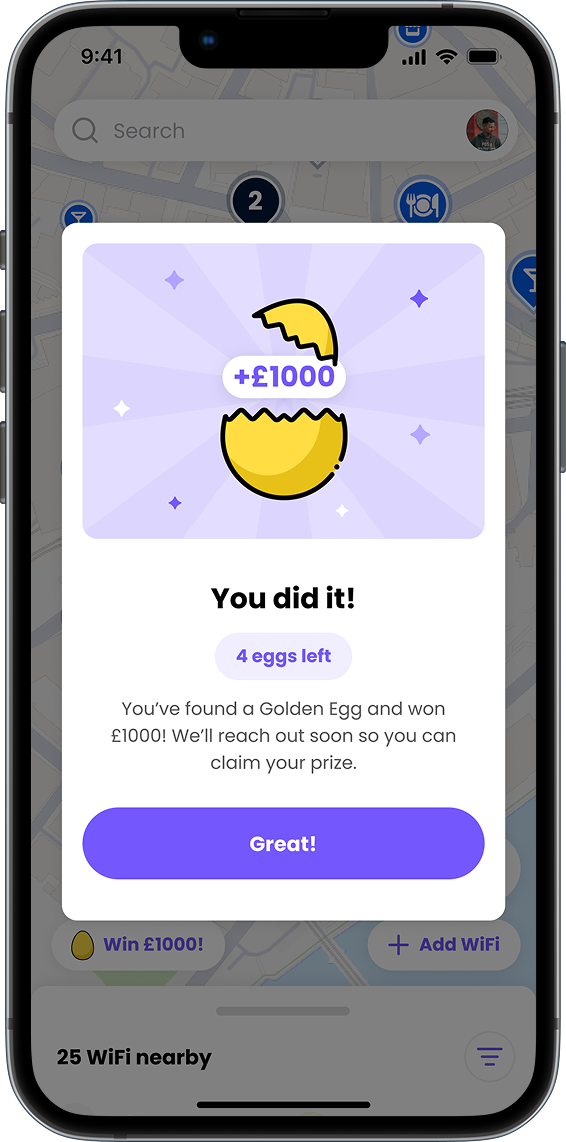
Egg Hunt was a short-term engagement experiment designed to encourage exploration and contributions. Users could join the activity, add networks, and discover hidden “eggs,” which were converted into a monetary reward.



Client’s testimonial

Volpis delivered a solution that worked and could blue dot navigate around an indoor environment. The app’s features worked, and users could quickly add WiFi networks. The team was timely, responsive, and trustworthy. They committed to the timeline and budget.
Contact us to build the right product with the right team

Top rated company since 2015

Top mobile app development 2018

Top B2B company 2019
Showcase
Similar projects

Rand One
fleet management
Volpis helped Rand McNally launch Rand One – a mobile fleet app with real-time tracking, biometric login, and driver performance scoring. Developed for Android and iOS, the app replaces hardware GPS, improves accountability, and brings modern visibility tools to large-scale fleet operators across North America.

FleetSu
Fleet management mobile app
Fleetsu is a mobile fleet management app providing real-time vehicle tracking, driver authentication via biometrics, and performance scoring. Developed for both Android and iOS, it replaces traditional GPS hardware while improving accountability and operational visibility. With integrated voice commands plus CarPlay and Android Auto support, the app enhances driver safety and reduces distractions.

Trusty
Community-driven mobile app
Built as a mobile app for discovering and reviewing restaurants, Trusty allows users to share ratings, photos, and personal experiences. The app focuses on making user-generated content easy to browse and contribute, with clear navigation, and personalized lists. Volpis was responsible for iOS and web development, implementing core functionality, integrating APIs, and ensuring stable handling of user-generated content.